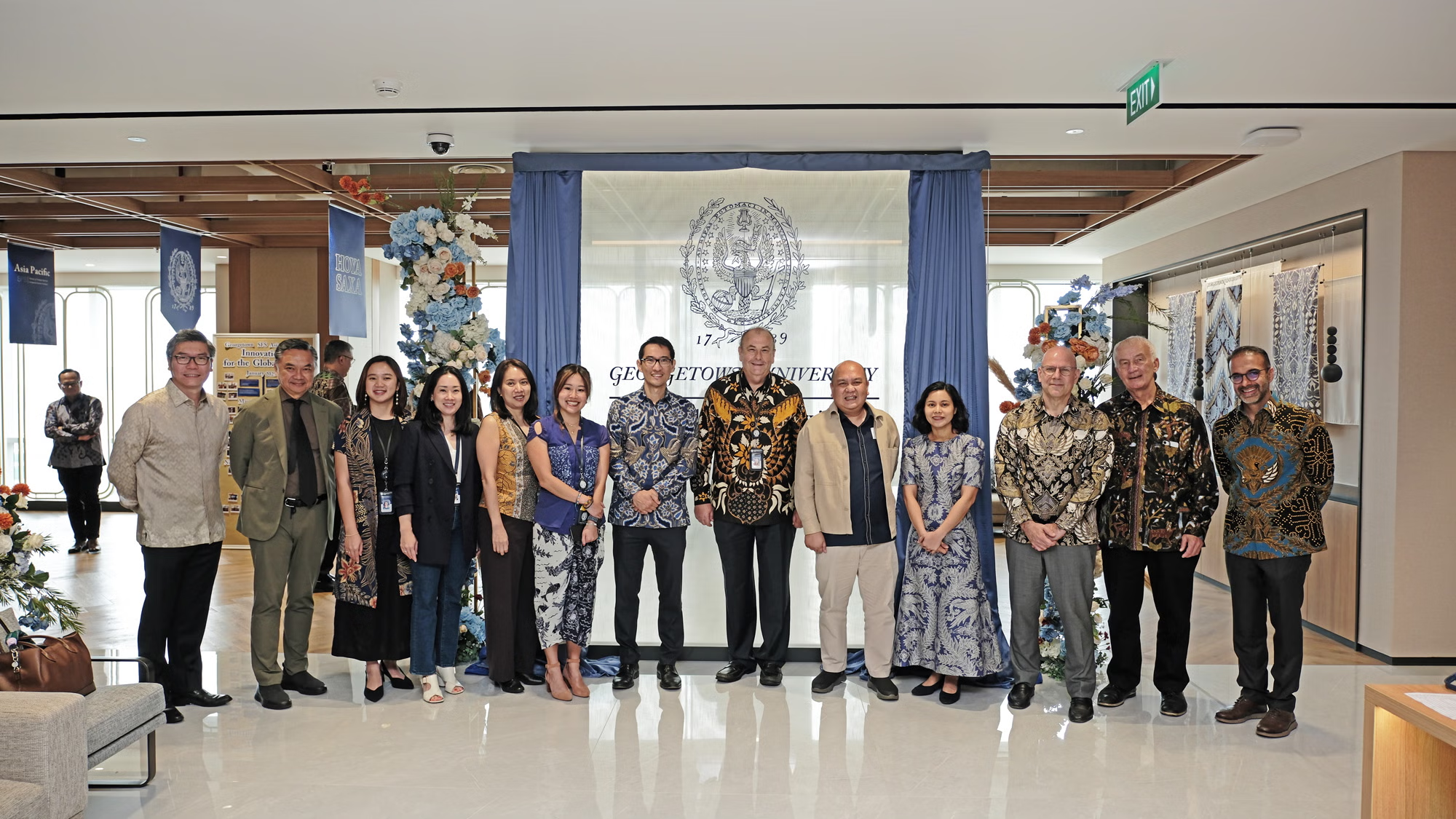
Georgetown University and Georgetown SFS Asia Pacific (GSAP) marked a milestone as the university’s first branch location in Indonesia and its newest academic hub in the Asia–Pacific region closed out a successful first year. Located in central Jakarta, GSAP has expanded Georgetown’s global footprint, and its presence reinforces the university’s commitment to international education, regional engagement and collaborative research across Southeast Asia.
Since opening in January 2025, GSAP has begun work on its ongoing mission through three flagship initiatives that reflect Georgetown’s strengths in global affairs and its commitment to addressing complex challenges in the Asia–Pacific and the Global South:
- The Master in Diplomacy and International Affairs (MDIA) is a one-year program in economic diplomacy, security, and international negotiations for mid-career professionals, supported by LPDP scholarships from the Indonesian government. The first cohort of 25 students has already graduated, and MDIA has welcomed its second cohort.
- Georgetown Semester in Jakarta/Policy Labs are immersive courses at the intersection of science, policy and economics that incorporate research to address issues such as critical minerals, sustainable fisheries, livable cities and social protection systems.
- The Georgetown Global Cities Initiative is a landmark partnership that brings Jakarta civil servants into collaboration with Georgetown faculty, combining classroom learning and applied research on urban development, hydrological resilience and social protection to strengthen innovation in city governance.
Answering the challenges of the Global South and the Asia Pacific
GSAP also advances the university’s broader vision of preparing students for a rapidly changing global landscape. GSAP offers graduate studies, policy labs, and research initiatives tailored to the region’s most pressing challenges—from urban governance and peacebuilding to sustainable development and digital transformation.
GSAP was built on a belief that global institutions must be reshaped for a rapidly changing world.
Dean Joel Hellman
In remarks at a ceremony in Jakarta in late November, Dean Joel Hellman said, “we need to think boldly and innovatively about how we prepare the next generation of leaders and how we build a network that becomes a true foundation for new ideas on reimagining a world order that desperately needs renewal. By bringing students from across the globe and giving them real experience on the ground, we are not only educating them — we are equipping them to lead transformative change. My hope is that GSAP in Jakarta can become a true hub for this work across the Asia–Pacific, a place where global talent, regional insight,and creative leadership come together.”

The ceremony formally introduced GSAP to the wider public and celebrated the university’s growing community of students, faculty, alumni, policymakers and global partners. The speakers included representatives from the Ministry of Investment and Downstreaming; Ministry of Foreign Affairs; the Vice Minister of Higher Education, Science, and Technology; and the Indonesia Endowment Fund for Education (LPDP). It concluded with the unveiling of the Georgetown University seal, symbolizing the university’s official and enduring presence in Jakarta.
A convening platform bringing diverse voices to the forefront
As part of a series of academic and community events, Hellman hosted a dialogue with Georgetown alumni and a fireside chat titled “Re-Imagining Global Institutions.” Guests included Kamala Chandrakirana, human rights advocate and former chair of Indonesia’s National Commission on Violence Against Women, and H.E. Amb. Dino Patti Djalal, founder of the Foreign Policy Community of Indonesia and former ambassador to the United States.

This session was also part of the GSAP speaker series, GSAP Talks, spotlighting a wide spectrum of voices, from grassroots community advocates and NGO practitioners to former ministers, senior government officials and high-level political leaders, ensuring rich and multifaceted perspectives. GSAP Talks examines issues at the heart of contemporary policy debates and demonstrates GSAP’s commitment to exploring the issues that will shape the next generation of global leadership.