
By: Jaime Ocon (SSP’27), Admissions & Alumni Fellow
Georgetown University’s Security Studies Program (SSP) continues to distinguish itself not only through the caliber of its faculty and curriculum, but through the global experiences that its students pursue. Read below for how current and incoming students can build off SSP partnerships in Southeast Asia, the Middle East, and Europe.
Tin, tech, and strategy: How Luke Zakedis’s (SSP’26) security focus took him from Washington to Indonesia
Considers home: Bay Area, California
Undergraduate Institution: UCLA
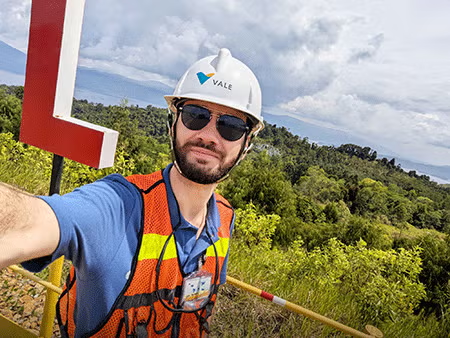
For Luke Zakedis (SSP‘26), one of the most important lessons during his time at Georgetown did not come from a classroom, but from standing in a tin mining pit on a remote Indonesian island. As he held his smartphone, he realized the components inside it had come from the ground beneath his feet.
During his time in SSP, Zakedis studied abroad at Georgetown SFS Asia Pacific (GSAP), spending a semester in Jakarta alongside fellow graduate students and Indonesian professionals while traveling across the region. He says the experience offered something that the Hilltop campus couldn’t replicate:. “So much of our curriculum at SSP centers on how the United States needs to engage the Global South… but to actually live in Jakarta, and then walk the halls of the Bandung Conference where the Non-Aligned Movement was born, made those abstractions viscerally real.”
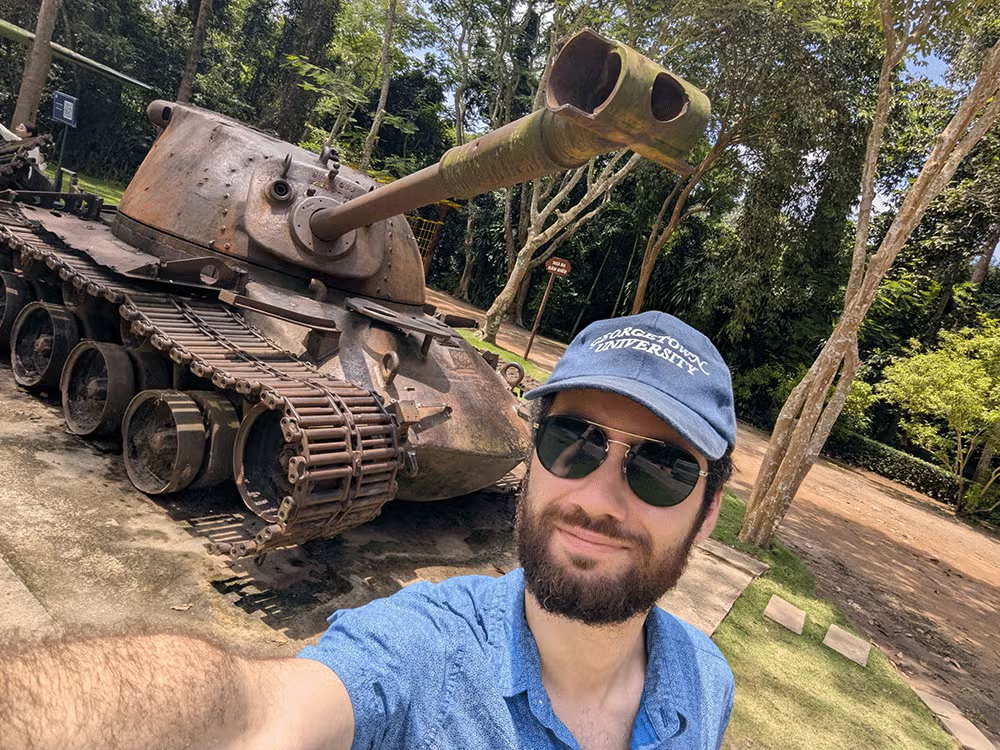
When he landed in Indonesia, riots had broken out across Jakarta and the coal smog, monitor lizards and field cobras were regular features of his fieldwork. There, he focused his research on the viability of Indonesia’s rare earth sector and critical minerals. Zakedis assembled a small team consisting of an Indonesian mining expert, a local guide and driver, and a research assistant to travel across Bangka Island, which produces between 20 and 30% of the world’s tin supply. It’s here where Zakedis would be able to convey real life developments into his research and, furthermore, into security policy recommendations.
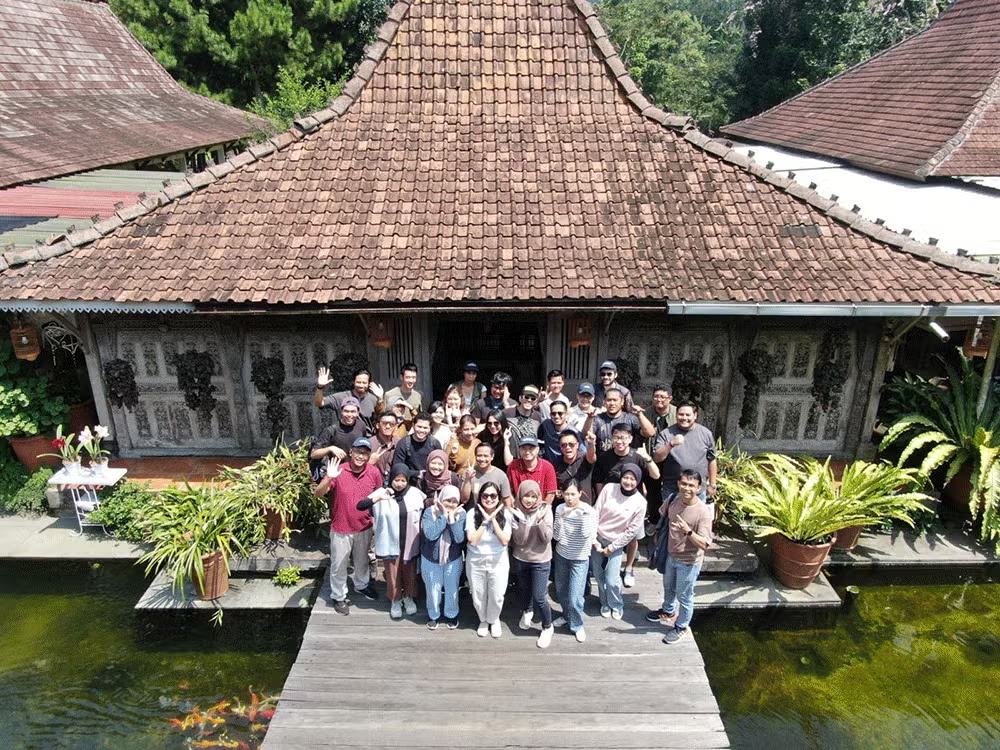
Zakedis says the experience reshaped his view of the technology and defense supply chain:. “Without Bangka’s miners, there is no tin. Without tin, there is no solder for manufacturing fabs in Taiwan, and, without that, no advanced chips for iPhones or F-35s.” Zakedis traveled across Southeast Asia, visiting places like the Cu Chi tunnels in Vietnam and Toraja’s cliff graves in South Sulawesi, Indonesia—not as a tourist, but as a researcher. “When I write about the region now,” he says, “I don’t picture a map. I think of the people I met there.”
Georgetown University’s School of Foreign Service (SFS) extends its tradition of excellence in international affairs education to Jakarta, Indonesia, at Georgetown SFS Asia Pacific (GSAP). As the first U.S. university to establish a branch location in Indonesia, GSAP is committed to addressing the pressing challenges of the Global South and the Asia Pacific.
Answering the Middle East’s most difficult questions: Hana Elshehaby (SFS’22, SSP’28) brings a decade of experience in Qatar to SSP
Considers home: Egypt and Qatar
Undergraduate Institution: Georgetown University in Qatar
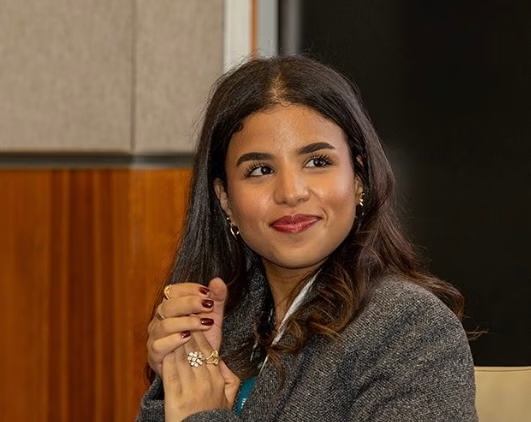
For incoming SSP student Hana Elshehaby (SFS’22, SSP’28), her career has been shaped around the idea that the most important work in Middle East security happens between the crises, not during them. A graduate of Georgetown University in Qatar and former research assistant at the Middle East Council on Global Affairs in Doha, she has spent four years asking how the region can build sustainable security without requiring a crisis to trigger that change.
Elshehaby says she found herself drawn to a different set of questions than those that dominate conventional security discourse. “What primarily drew me in was not the securitization lens that often dominates this field,” she explains. Instead of focusing on conflict stabilization or crisis response, her research gravitated towards a more constructive question: How can the region build lasting security through partnerships and adaptable strategies? It’s this perspective that led her to develop a strong interest in the U.S.-GCC security ties, China’s expanding role in the Middle East, and the rise of new defense actors, such as Pakistan.
She says finding answers to these questions feels more urgent now than ever, and she hopes SSP’s academic environment is a starting point to sharpen the analysis needed to address them. Elshehaby explains that by picking the international security concentration, it will help deepen her understanding of how global threats take shape at the regional level and how international dynamics affect the Middle East’s security reality.
Elshehaby is arriving in Washington with a clear sense of what she is looking for: engagement with like-minded faculty, cross-regional dialogue with peers who have similar passions, and proximity to the center of the political world. “I look forward to being in Washington, D.C,. at a moment when the very foundations of the global order the world has known for decades are being interrogated.”
Admissions Note: The Security Studies Program offers a five-year accelerated degree for BSFS undergraduate students at Georgetown University in Qatar. Prospective students can apply as rising juniors. Email Doug Umberger, director of admissions and alumni engagement, at sspadmissions@georgetown.edu for more information.
Georgetown SSP partners with the Bern Security Dialogue on European Security
Halfway across the globe, Georgetown SSP was also busy deepening its engagement with some of its oldest allies. This year, SSP formed a new partnership with the Bern Security Dialogue, co-led by alumna Amanda Rivkin (SSP’11), which seeks to advance collective security in Switzerland and the Alpine Region.
“This is the moment to strengthen transatlantic bonds as we are one another’s strategic depth,” Rivken shared. “It took generations and the slaughter of millions to fortify these ties. It matters most now because it is all the more difficult and necessary.”
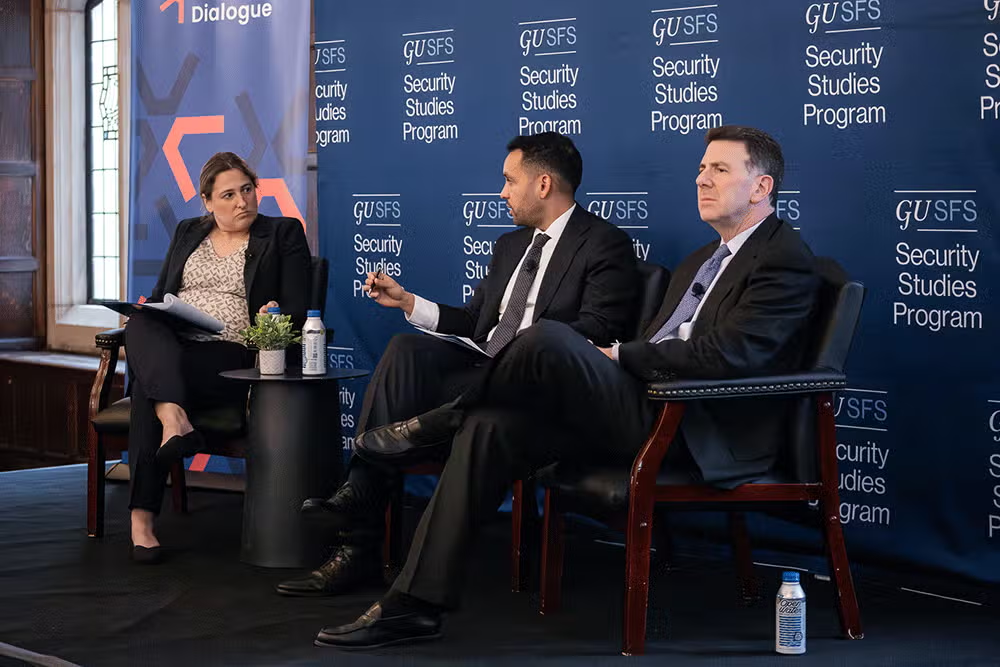
Through conferences held in both the United States (Washington, DC) and Switzerland (Bern), the dialogue brings together leading security professionals and scholars from across the United States and Europe to analyze how Alpine states might cooperate better in the name of collective security.
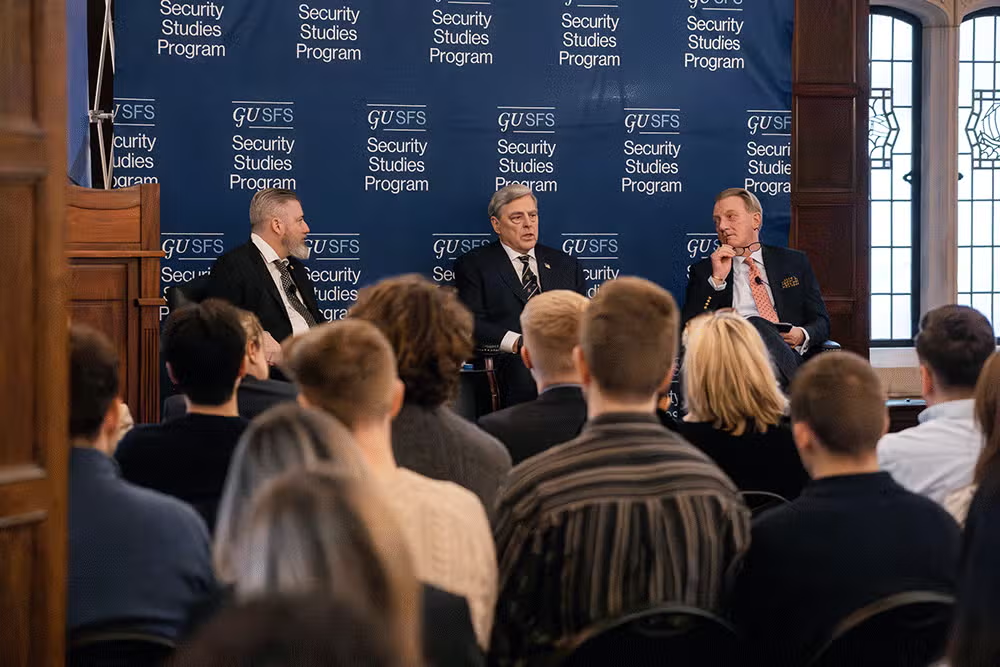
In February on the Hilltop, the program launched the initiative by hosting “Alpine Security in a Fragmented World,” featuring veteran experts and military officials like General (Retired) Mark A. Milley, SSP’s Distinguished Fellow in Residence; Ret. Lt. Gen. Jürgen-Joachim von Sandrart of Germany; and Col. Georg Häsler of Switzerland.
SSP Professor Daniel Byman, who participated in both workshops and is a member of their advisory board, believes this collaboration comes at a pivotal time on the global stage: “After years of relying on the United States and facing a relatively benign threat environment, Europe must now manage an aggressive Russia with unclear U.S. backing. This has forced even small European states to reconsider their security policies.”
For the Georgetown SSP community, the partnership offers an opportunity for direct and constructive dialogue. As SSP approaches its 50th anniversary in 2027, students, faculty, and alumni now have greater access in engaging with European perspectives on the threats they face today and in the future.
Interested in joining the Security Studies Program (SSP)? Learn more about the curriculum, career outcomes, and admissions process by visiting our website or send us an email at sspadmissions@georgetown.edu.