On December 8, 2024, the dictator who had led Syria for more than two decades was ousted from power in a rebel offensive. In the year since Bashar al-Assad fled to Russia, Syrians have attempted to recover in the aftermath of both his removal and a civil war that had raged since 2011. This December sees Syrians celebrating the first anniversary of a post-Assad Syria and anticipating the U.S. Senate lifting sanctions against the country that have been in place since 2019. Removing sanctions should open the door to increased economic recovery and is the cause of much optimism within Syria. We asked SFS Professor Killian Clarke, an expert in revolutionary movements and Middle East studies, a few questions about the current environment in Syria and what the near-term future for the recovering nation looks like.
Q. One year after Assad’s removal after nearly 25 years in power—and after more than five decades of the Assad family ruling Syria—how has the leadership vacuum been filled? What types of governing structures have emerged in Syria, and how have these structures been perceived on the world stage?
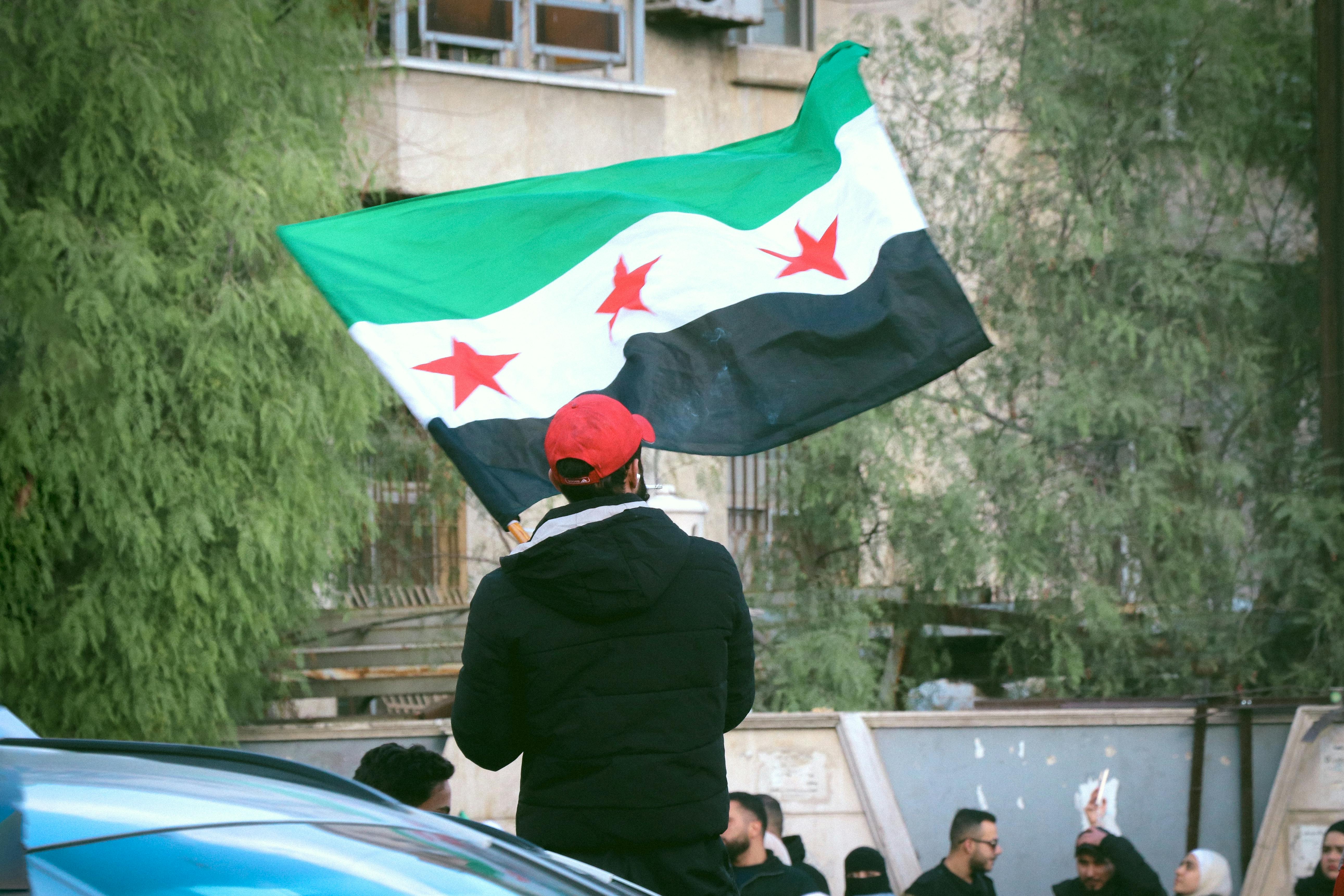
A. The Assad regime was ousted a year ago by a coalition of rebel groups, the largest and strongest of which is called Hay’at Tahrir al-Sham (HTS). This group had governed much of the northwest governorate of Idlib since 2017. Their leader, Ahmed Al-Sharaa, is now the president of Syria. When they first seized power, many Syrians, along with many foreign governments, worried that the group’s adherence to Salafi Jihadist ideology (and their prior Al-Qaeda affiliations) would lead them to establish a rigid Islamist autocracy, along the lines of the Taliban regime in Afghanistan. However, so far, this has not happened. Though the regime is fairly insular, with most high-ranking positions staffed by those close to Al-Sharaa, it has not imposed strict new Islamist laws or regulations. Its leaders have also promised to implement reforms that will ultimately establish a working democracy, though many remain skeptical about how serious the regime’s commitments to democracy really are. Still, this relatively restrained approach to governance has allowed Al-Sharaa to build considerable goodwill among the international community. In fact, he recently traveled to Washington, DC, to meet with President Trump—the first ever visit by a Syrian president to the White House.
Q. What does the current security environment in Syria look like? Have the former opposition groups come together, or are there multiple groups competing for control?
A. The security environment remains pretty unstable and fluid. HTS built up a strong rebel army, and this army has essentially replaced the army of the Assad regime, which was disbanded when the rebels seized power. But the new army is not particularly well-trained or disciplined, and it has struggled to assert control over the country and restore order. Many of the opposition and rebel groups that were fighting the Assad regime remain active and control key territories. For example, the Kurdish-backed Syrian Democratic Forces retains control over much of the country’s northeast. There have been negotiations between this group and the new government to integrate both politically and militarily, but so far, those negotiations have yielded few breakthroughs.
In other regions, there have been upsurges of violent clashes and reprisals. For example, in March, there was a brief uprising in the coastal region of Lattakia of Allawi Syrians (the Assad family’s ethnic group). That uprising triggered a violent response from various regime-aligned groups, including official security forces, and approximately 1,600 people were killed. A similar pattern of bloodshed occurred in the Druze regions of Suwaida this summer, where over 800 people died. So there is still a lot of uncertainty, and many non-Sunni and non-Arab minorities within Syrian society continue to view the regime with deep distrust.
Q. Are there any structures intended to hold people to account, like truth commissions, reparations, or trials, either under consideration or already underway?
A. Here, too, much is still in flux. The president has created two national commissions: one for transitional justice and one for missing people. The former is meant to investigate and bring to justice members of the former regime who committed serious human rights violations. The latter is supposed to investigate and document the fates of those who went missing or were forcibly disappeared by the former regime. The establishment of these commissions do represent positive steps, but they have been criticized by Syrians for being too slow and bureaucratic. So far, they have not led to any trials or punishments for high-level members of the former regime (many of whom are now in exile). The commissions have also been criticized for having too narrow a scope, i.e., focusing only on crimes and disappearances committed by the former regime.
Q. From the former Yugoslavia to Iraq, one factor that seems to hamstring societies after the fall of a dictator is the tendency of people to further splinter and divide along sectarian, ethnic, or political lines. Is this happening in Syria, and why or why not?
A. Yes, this is certainly a common problem, particularly when dictatorships are overthrown by armed groups. In Syria, unfortunately, we have seen some of this splintering. As I noted earlier, there have been a number of violent episodes in areas dominated by Syria’s ethnic minorities, like Allawi-dominated Lattakia and Druze-dominated Suwaida. While minority groups opposed to the HTS-led government were responsible for some of this bloodshed, it appears that much of the violence was committed by pro-government groups, including official security forces. This does not bode well for the new regime’s ability to peacefully incorporate and govern Syria’s multi-ethnic society. That being said, there are a lot of very active Syrian civil society and political groups that are committed to a civic future for Syria; one that ensures full representation and inclusion of all Syria’s social groups. They are working hard in Damascus to hold the new government accountable and ensure that Syria’s new political institutions reflect this vision.
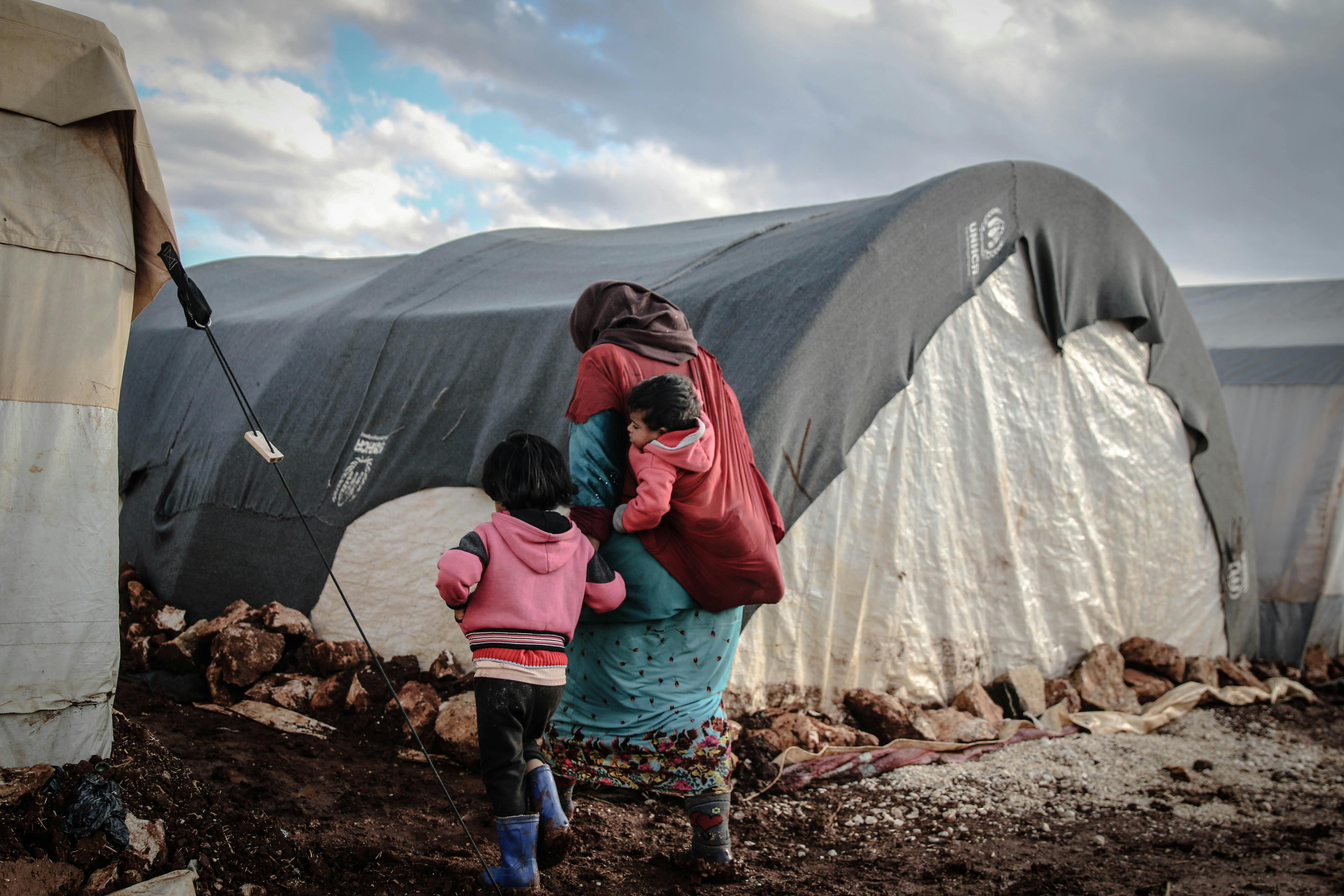
Q. The Syrian Refugee Crisis, which began in 2011, left more than six million internally displaced and five million Syrian refugees worldwide. How have displaced populations responded to evolving conditions on the ground in Syria?
A. This has been one of the more inspiring stories from the last year in Syria. Many Syrians who were displaced, both internally and as refugees, have returned home and are working hard to rebuild their country. The estimates are that two million Syrians who were internally displaced have returned, and 1.2 million of those based abroad. This is a very large number of people. And, importantly, particularly for those abroad, many of them could have chosen to remain in their new homes, but decided instead that they saw a brighter future for themselves back in Syria. This reflects the optimism that many Syrians everywhere have felt with the Assad regime coming to an end, and the chance to establish something new. Though there is still a lot of anxiety and uncertainty about what that future will look like after the rockiness of this first year, there is also still a lot of enthusiasm and energy.