
When Pierina Anton (GHD’23) began her career as a Foreign Service Officer at USAID, she envisioned a future firmly rooted in international development. That path recently took an unexpected turn—one that landed her at Walt Disney World.
Now a senior corporate social responsibility specialist at Disney, Anton is part of a growing group of SFS Master of Global Human Development (GHD) graduates applying their training beyond traditional development spaces. As the sector evolves, their skills are proving increasingly valuable across government, nonprofits and the private sector.
Anton reflects on her time in the GHD program, what led her to Disney and the development principles she’s applying to corporate social responsibility.
What first sparked your interest in international development, and how did your personal or academic background influence your decision to enter the GHD program at Georgetown?
My interest in international development is rooted in my family’s immigration journey. In the late 1990s, we fled Venezuela after a catastrophic mudslide destroyed our hometown of La Guaira. Growing up in Florida, I became aware of the opportunities I had compared to relatives who remained in Venezuela, many of whom struggled to access basic services like food, medicine and education. My parents instilled in me a belief that education is both a pathway and a responsibility. That conviction shaped my life’s mission: ensuring that no child is denied access to opportunity because of conflict, crisis or circumstance.

In high school, I completed the International Baccalaureate program at a Title I school in Central Florida, which became my first academic exposure to global affairs. Despite the economic barriers many of us faced, I carried big dreams of contributing to a more equitable world. With the support of excellent teachers, I earned a full scholarship to study international relations at Florida International University.
As a first-generation college student, my undergraduate experience was transformative. I pursued every opportunity to serve my local and global community. A study abroad program took me to Siem Reap, Cambodia, where I taught English to teachers-in-training and interviewed UNICEF staff on challenges facing the national education system. Working alongside young Cambodian educators—whose passion for teaching mirrored the impact my own teachers had on me—helped me see a future in global social impact work.
Back in Miami, I worked as a caseworker aide supporting unaccompanied youth from Central America. And during the COVID-19 pandemic, I co-founded a free tutoring service for K-12 students in Miami-Dade County impacted by the transition to online learning. Being able to combine my passion for education with my Spanish language skills felt deeply meaningful and affirmed my commitment to working with vulnerable youth. During this time, I applied to the USAID Donald M. Payne International Development Fellowship. I had remembered seeing USAID signs in schools and hospitals abroad, and the more I learned about the agency, the clearer it became that this was the path where my values aligned.
After a rigorous selection process—including a written exam, group exercise and panel interview with former ambassadors—I was selected as a Payne Fellow in 2021. Soon after, I was accepted to Georgetown’s Global Human Development Program. It felt like a dream realized: the opportunity to join the U.S. Foreign Service, learn from world-class faculty and train at the school that had always represented the pinnacle of global education and public service for me.
Within the GHD program, what areas did you focus on academically? Were there specific courses, fieldwork experiences or projects that were especially influential in shaping your career direction?
Within the GHD program, I pursued the education and Human Capital specialization, which aligned directly with my commitment to advancing equitable learning opportunities globally. The Strategy, Design and Implementation course was particularly foundational. As a required, first semester course, it taught me how to think intentionally about the full life cycle of social impact initiatives: from ideation and problem analysis to implementation and adaptive management. Paired with GHD’s year-long quantitative sequence in evaluation methods, I developed the analytical rigor to assess program effectiveness and the mindset of designing solutions that “do good, better.”
The Ethics Retreats remain one of the highlights of my time at GHD. Engaging deeply with principles of social justice, ethical decision-making and community partnership alongside classmates who brought diverse lived experiences profoundly shaped me as a social impact practitioner. Those conversations challenged me to interrogate assumptions, listen deeply and reflect on how power, privilege and positionality inform any intervention. Because of that grounding, I approach community engagement and project design today with a heightened sense of responsibility, humility and care.

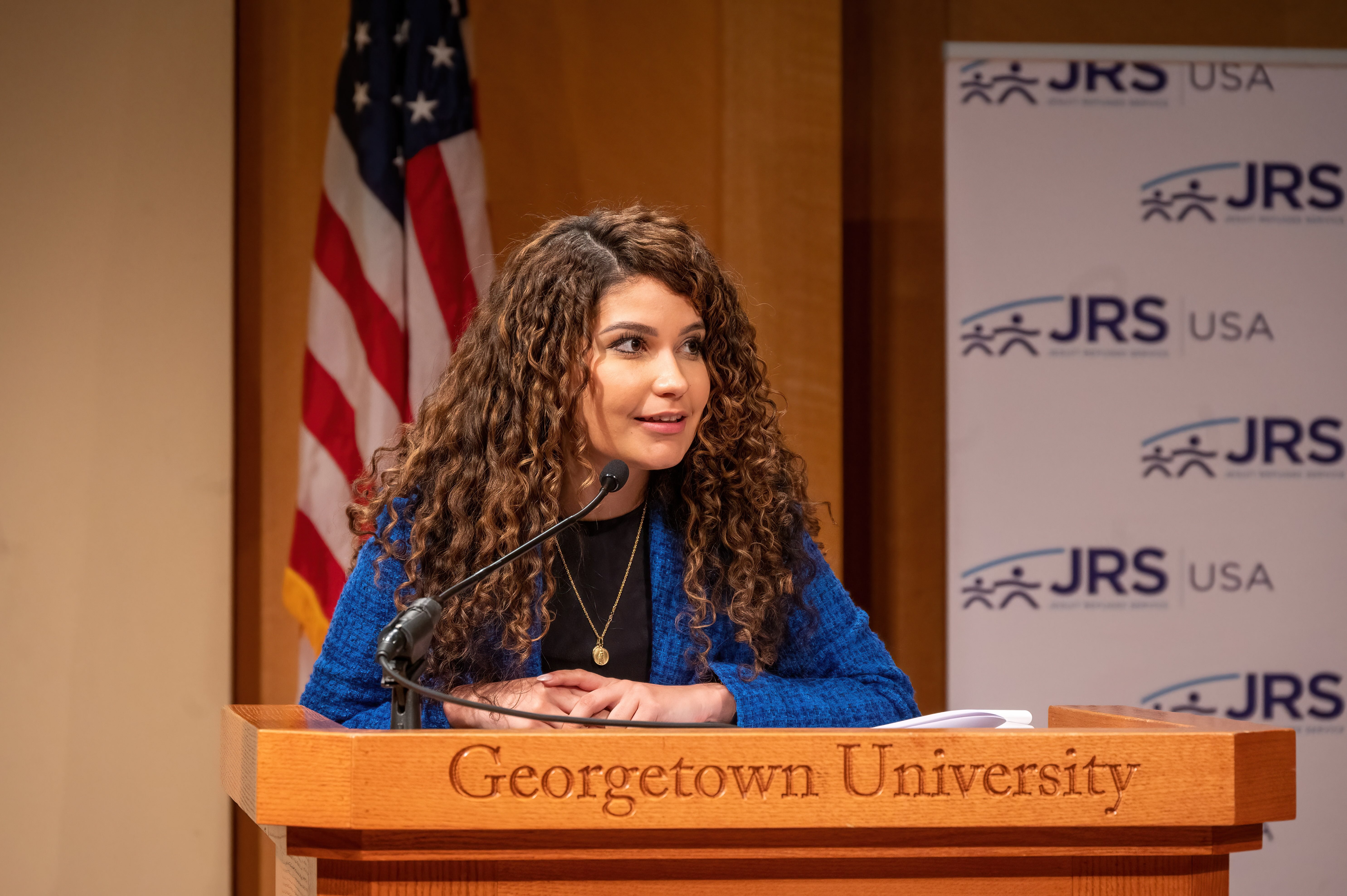
The capstone course, which is designed as a real world, problem solving consultancy with a global organization, allowed me to apply my coursework in a substantive way. In my capstone, I worked with the International Rescue Committee team in Kenya to conduct qualitative research, stakeholder mapping and equity-centered focus group design. I later traveled to Kakuma Refugee Camp to support our research with displaced communities, and that experience felt like the culmination of my time in GHD. It brought together program design, humanitarian frameworks and applied research in one setting and affirmed my commitment to working at the intersection of education and global social impact.
What led you to your current role at Disney, and what motivated your move into corporate social responsibility within a global, private sector organization?
After the closure of USAID impacted my role as a Foreign Service Officer, I relocated back home to Central Florida and began working with Walt Disney World’s Corporate Social Responsibility team. Although my career up to that point had been rooted in federal public service and global development, I had long been interested in how private sector organizations use their resources and partnerships to create measurable social impact—particularly in the communities in which they operate.

Growing up in Central Florida, I saw firsthand how the region functions as a global tourism hub while also grappling with challenges such as economic inequity, food insecurity, affordable housing shortages and disparities in educational access. When the opportunity arose to support Disney’s CSR initiatives, it felt like a meaningful and values-aligned transition. Disney’s mission of bringing joy to children and families does not just manifest in its theme parks and iconic movies; it extends to the diverse families, students and communities who live across the five county region surrounding them.
Joining the CSR team has been a true homecoming. The role allows me to contribute to community engagement efforts focused on youth development, education, economic mobility and social support systems while applying many of the same principles that guided my work in international development. I saw it not as a departure from public service, but as a different avenue for advancing opportunity and dignity for communities I deeply care about, including the one that shaped me.
What early lessons have been most meaningful in your role so far? How do you see GHD principles showing up in your daily work—whether in strategy, stakeholder engagement or community impact?
In my early months at Disney, one of the most meaningful lessons has been witnessing how seriously the company approaches its role as a community stakeholder. I see this reflected in leadership’s commitment to opportunity and inclusion; in the way nonprofit partners are treated as thought leaders; and in the enthusiasm of more than 80,000 cast members (employees) who volunteer thousands of hours each year across Central Florida. Disney constantly encourages innovation, and a lesson I learned early on is that no idea is too ambitious if it supports community well-being.
My experience in GHD shapes my work daily, particularly in how I approach community engagement and strategic program design. GHD taught me to look beyond symptoms of social challenges and instead interrogate the systemic root causes. It also instilled in me a belief that solutions must be community-led, collaborative and grounded in dignity.
Pierina Anton (GHD’23)
Today, that shows up in how I structure partnerships: starting with questions such as, “What is the community telling us they need?” and “How can our assets—whether expertise, networks, philanthropy or employee engagement—meet that need responsibly?” GHD equipped me with a framework centered on listening, co-creation and elevating underrepresented voices in the decision-making process. Seeing those principles reflected within Disney’s corporate social responsibility strategy has reinforced that social impact can be advanced across both public and private sectors, and that values-driven work is not exclusive to traditional development institutions.
What guidance would you offer to current GHD students or people entering the development field—particularly given today’s urgent global challenges?
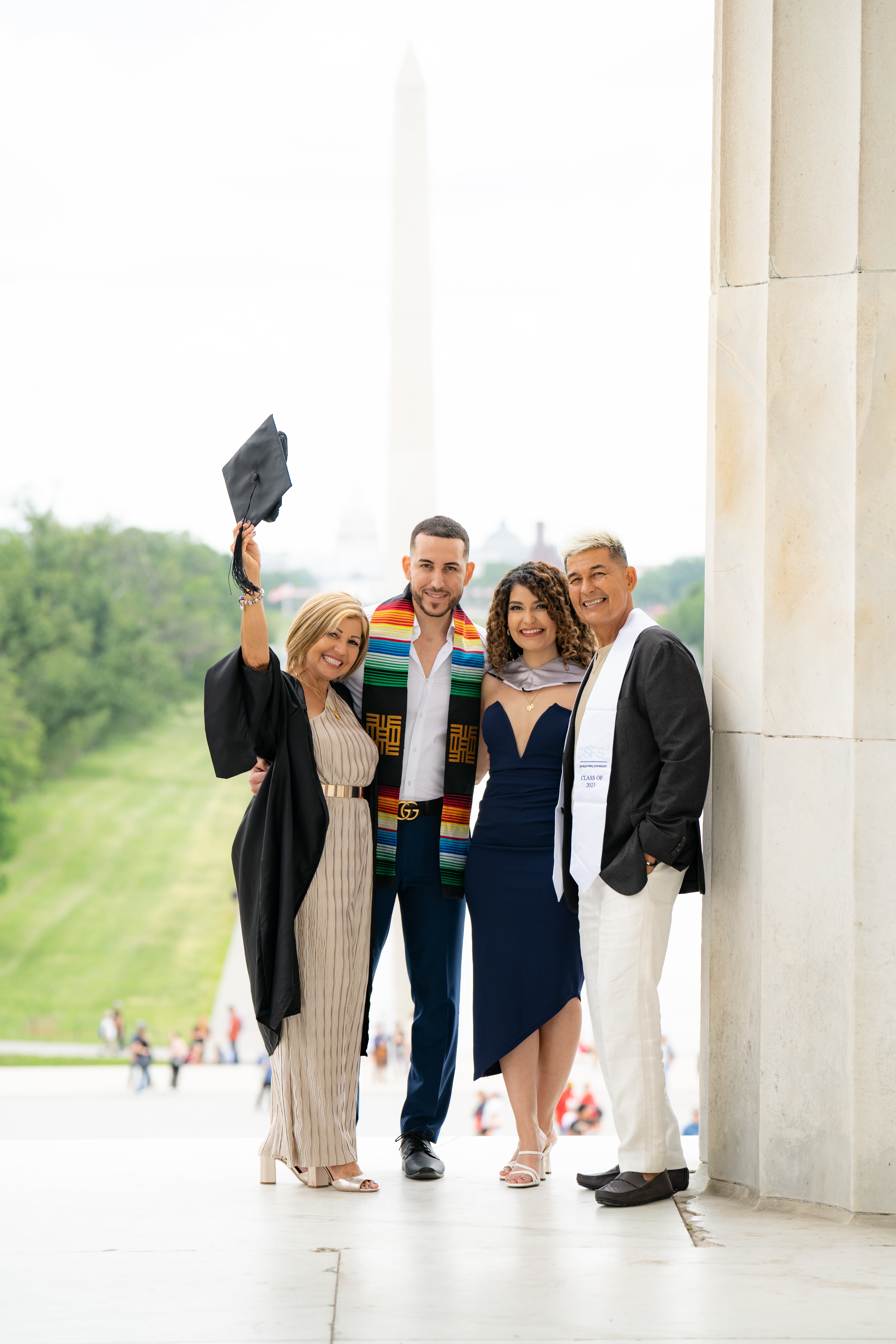
Don’t be afraid to think big. The complexity of today’s challenges, whether climate displacement, inequality or educational disruption requires leaders who are curious, adaptive and willing to push beyond conventional approaches. Be nimble, embrace creativity in the face of uncertainty and build the muscle of evaluating progress, learning and pivoting.
Lean on the network you have at Georgetown. Your GHD classmates, alumni and professors are not simply academic touchpoints. They will become collaborators, mentors and co-creators throughout your career. Take advantage of opportunities to ask difficult questions, whether in the classroom or the boardroom. Those moments often spark the deeper conversations needed to drive systemic, community level change.
Most importantly, take time to pause and reflect on both the gift and responsibility of this work. Development is fundamentally about human dignity, agency and partnership. Ground yourself in humility, integrity and an ethics of care. Now more than ever, the world needs values-based leaders who pair technical rigor with authentic commitment to communities. Your time at Georgetown will shape you into a leader who can imagine bold solutions, execute them thoughtfully and ensure people closest to the challenges are centered in every decision.