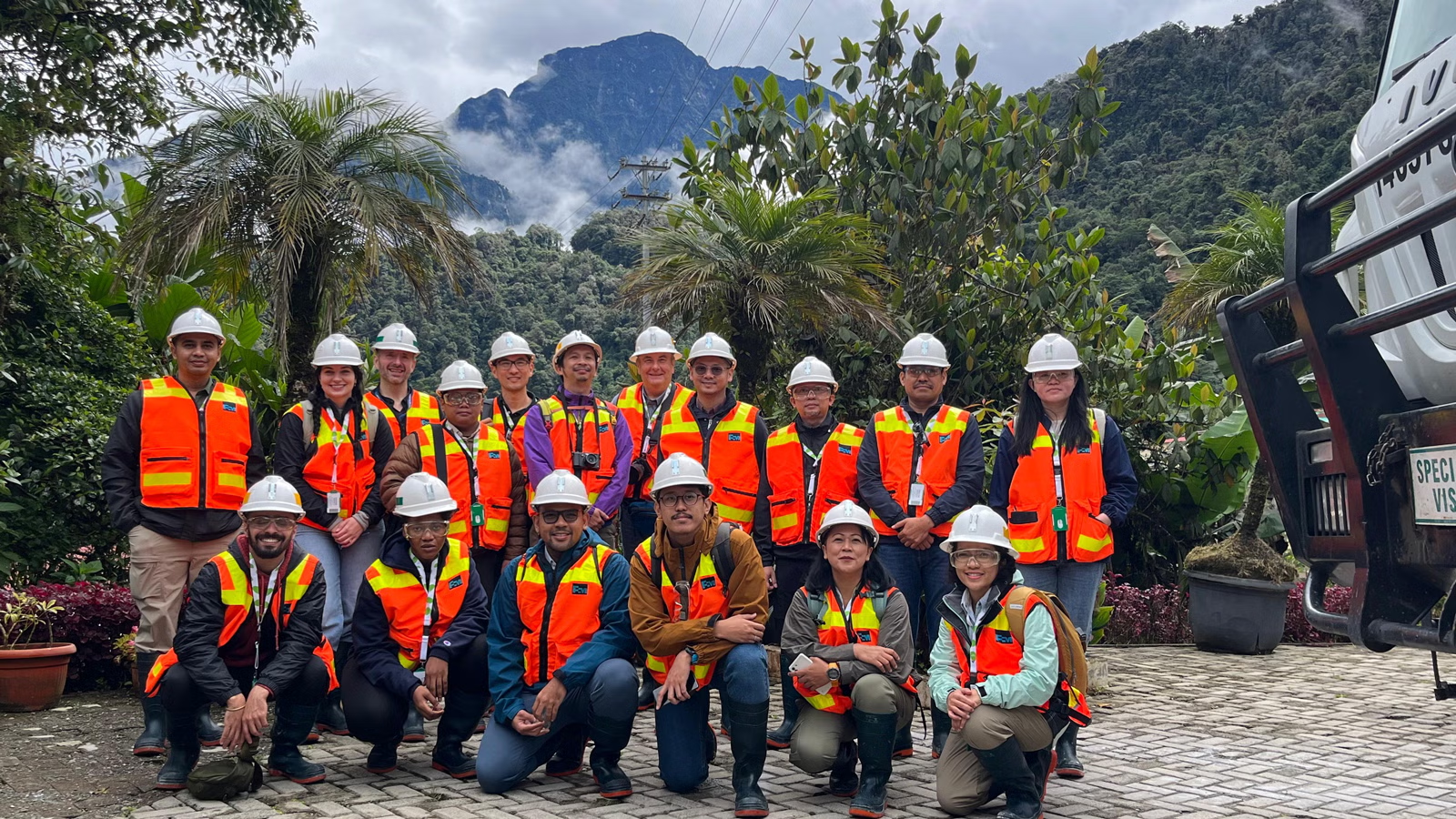
Georgetown SFS Asia Pacific (GSAP)—the School of Foreign Service’s (SFS) branch location in Jakarta, Indonesia—extends the SFS’s tradition of academic excellence in international affairs through diverse programs. The semester in Jakarta program, specifically designed for students in two-year SFS master’s programs, offers a suite of immersive policy courses where students develop actionable solutions to critical issues facing the Global South.

Linda Uzoamaka Christopher (GHD’26), a second-year student in the Global Human Development program, specializing in economics and finance, was one of the first Hilltop students to participate in a policy lab in 2025. She reflects on her summer experience in Jakarta, including insights from a field visit to one of the largest copper mines in the world operated by Freeport-McMoRan, an American company with operations in both Arizona and Papua, Indonesia.
Redefining foreign service in a fragmented world
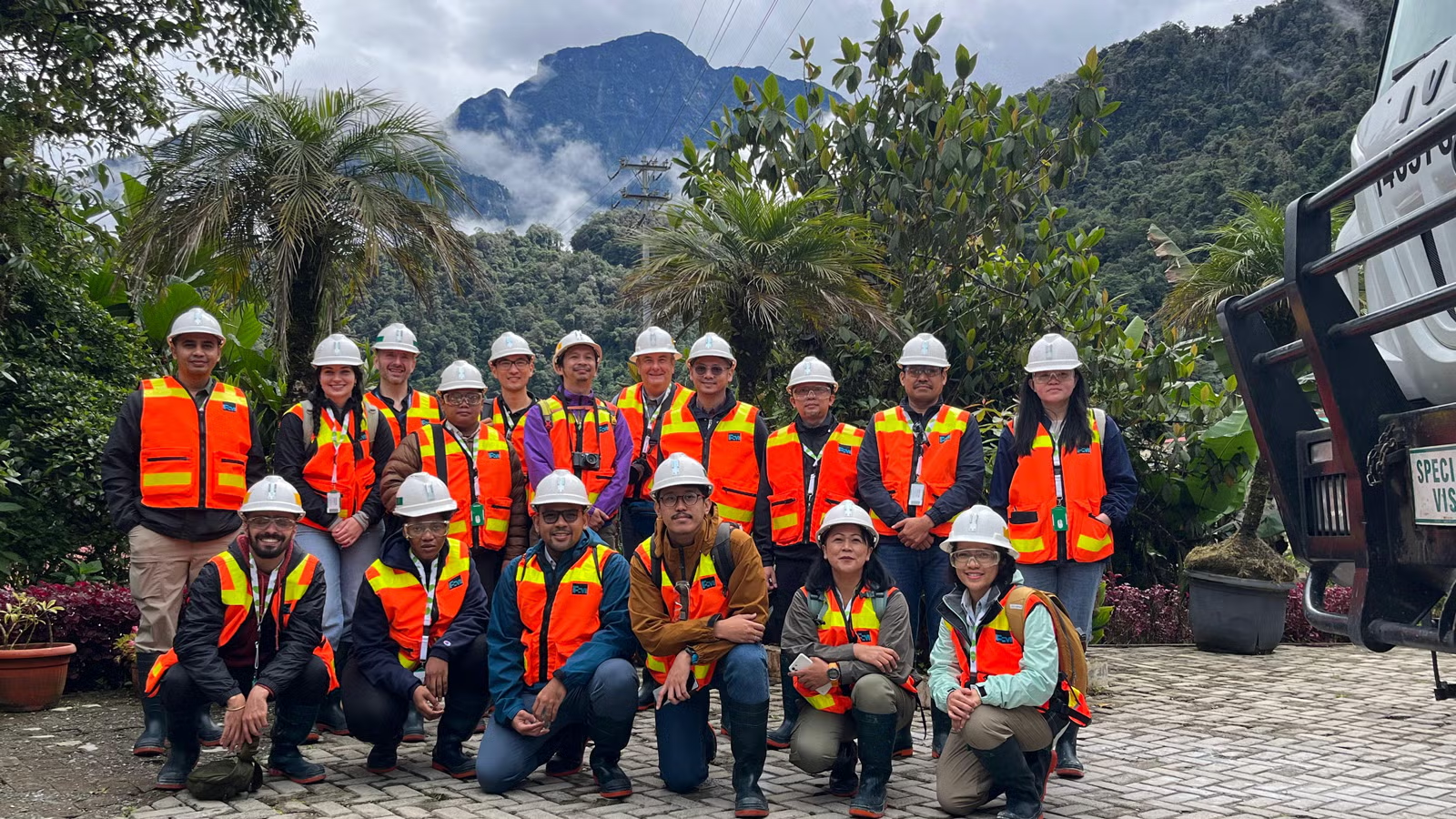
We arrived in Papua expecting to see one of the biggest copper mines in the world. What we saw instead was a city operated not by a government, but by a private company—hospitals, schools, vocational centers, paved roads, inter alia [among other things]. PT Freeport Indonesia (PTFI) has built a parallel state, not out of charity, but as part of its social license to operate. For a moment, it seemed as though the lines between government and company had blurred.
In many ways, this trip forced us to rethink what “foreign service” means in today’s world. Once a term reserved for diplomats in embassies, foreign service now extends to corporate social responsibility managers, humanitarian workers, environmental scientists and local mediators navigating development at the margins. The global order is increasingly multipolar and uncertain, and the role of the U.S. has become less predictable. In that vacuum, non-state actors like PTFI, international NGOs and even student policy labs are stepping into roles once reserved for statecraft. This is both an opportunity and a caution: if foreign service is evolving, then so must its tools, ethics and expectations.
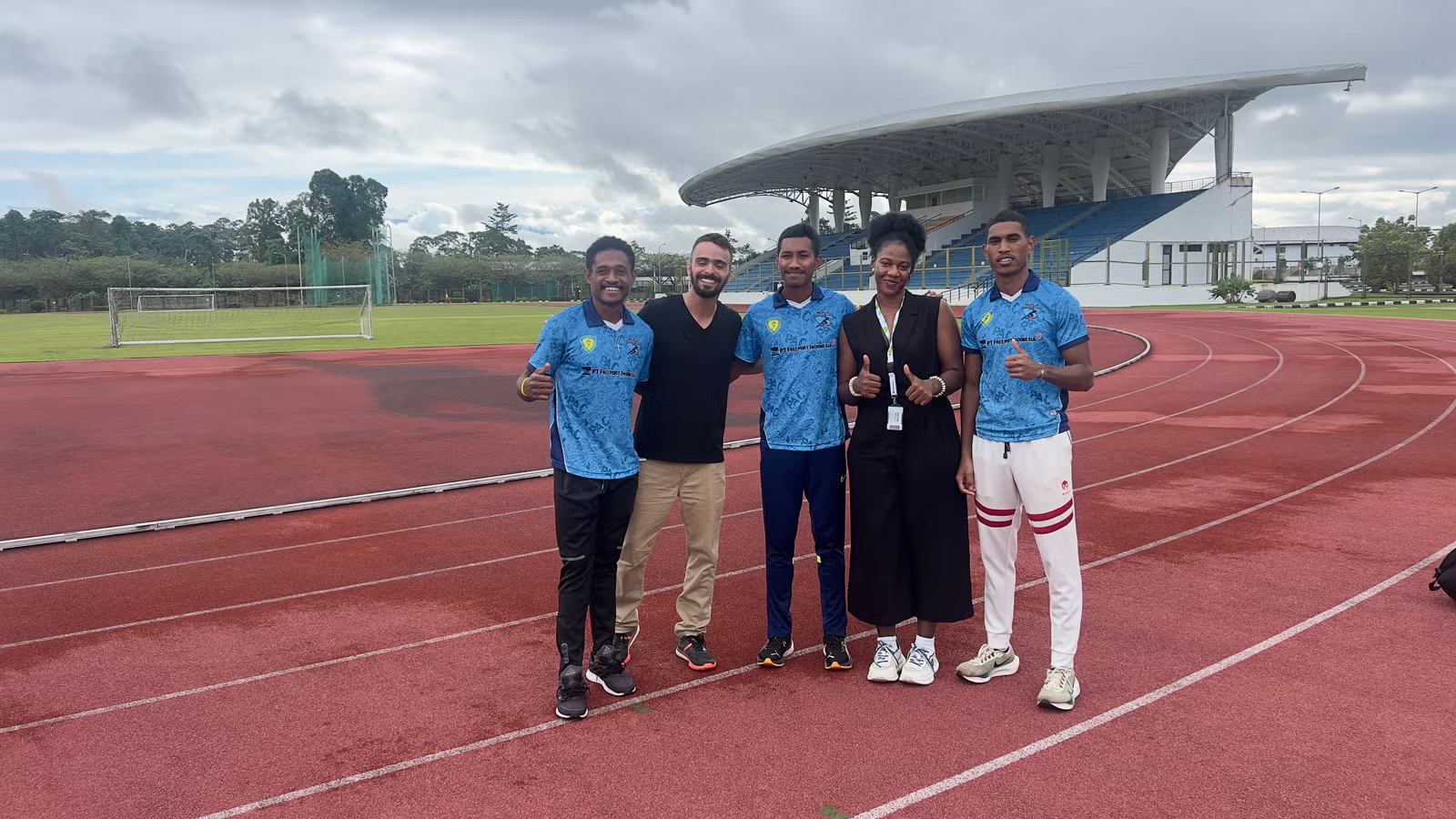
This trend isn’t limited to Indonesia. Across the Sahel, private security contractors fill governance vacuums. In Afghanistan, donors became de facto planners. In the DRC, mining firms operate police outposts. And in Papua, a multinational company is shaping local livelihoods. This is the new development frontier: murky, actor-diverse and morally complex. Anne-Marie Slaughter aptly described it as the rise of “networked power”—a world where influence no longer resides solely in institutions but flows through interconnected actors, including corporations, civil society and policy labs.
Why immersive learning matters
There are things no textbook or journals can teach you: the unease of entering a pristine hospital with echoes of poverty and resilience; the quiet dignity of a vocational student learning welding in a place his ancestors never envisioned; the strategic silences of a tour guide hinting at illegal mining and state complicity. These moments linger because they cannot be replicated in the classroom, only felt in person. Immersive learning collapses the space between policy abstraction, simulating regressions and lived reality. Concepts like “public-private partnerships,” “elite capture,” “context sensitive programming” or “CSR accountability” took on new texture in Papua. We were no longer just talking about development; we were inside it. We saw unmediated how corporate-led infrastructure can create both opportunity and dependence. We watched how benefits flowed narrowly to “recognized tribes” while others remained invisible. And we felt the tension between gratitude and grievance among communities who depend on the very institution that they may not fully trust. This discomfort was not incidental. It was pedagogy.
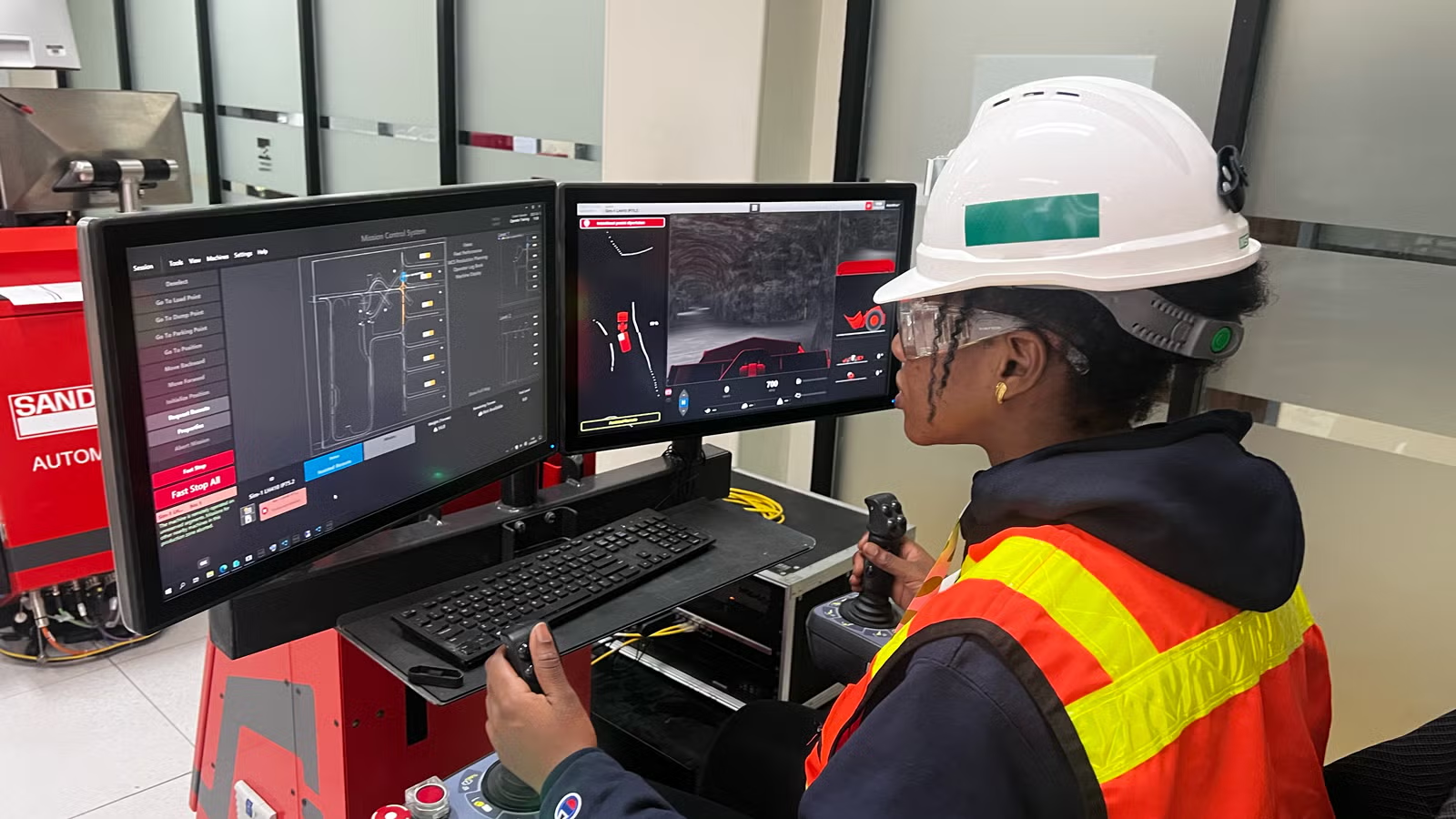
Georgetown’s Asia-Pacific Policy Lab succeeds because it brings students into spaces where power flows unevenly. It teaches us to listen with humility, question our assumptions and engage ethically, not just analytically. In a time when policy solutions are often exported from capitals, immersive learning helps reverse the gaze. We were there to learn, not fix. That alone shifts the narrative.
Seeing the Global South differently: Lessons from Papua to Niger Delta
Papua felt distant but familiar. It echoed regions like Nigeria’s Niger Delta and even parts of the Democratic Republic of Congo. The landscapes differ but the patterns are the same: resource extraction, contested legitimacy and uneven development. PTFI’s recognition of only seven tribes for CSR programming in Papua raises difficult questions: What about the other over 1,000 tribes? Who decides who qualifies as a beneficiary? The dynamic follows patterns seen in Nigeria, where oil-producing communities compete for recognition under corporate agreements. In both contexts, extraction shapes revenue, who is included and excluded.
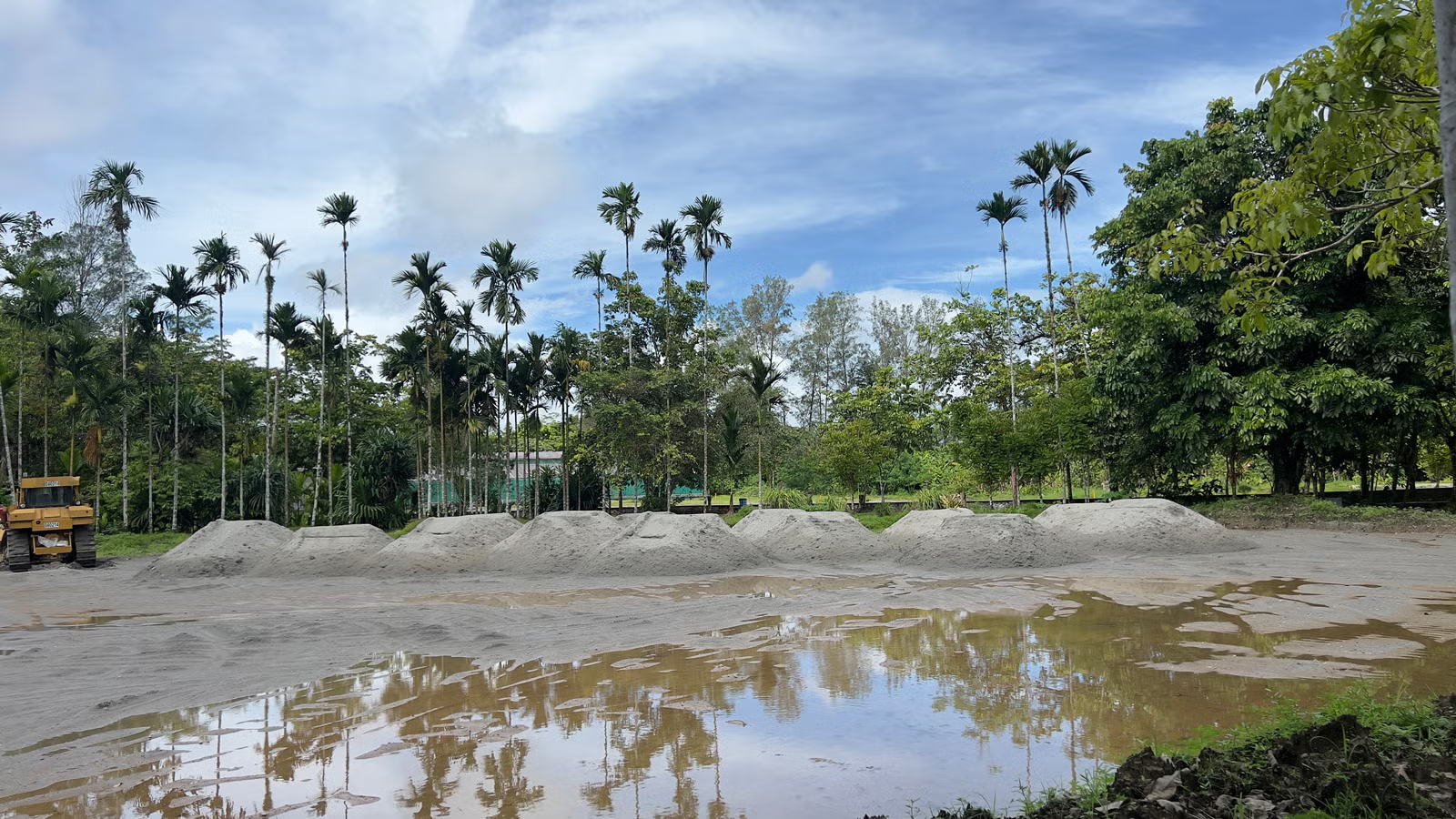
Nigeria’s 2009 Presidential Amnesty Programme (PAP) offers a similar lesson. While it reduced violence, many beneficiaries remained unemployed post-training, and some communities viewed the program as rewarding militancy over peaceful civic engagement. As Paul Collier warned in The Bottom Billion, post-conflict interventions often prioritize stability over justice, risking a “peace without reconciliation” that breeds future grievances. The same tensions are visible in Papua, where community voices outside formal recognition remain unheard.
Even more striking was the limited presence of civil society in Papua. In the Niger Delta, NGOs, youth groups and faith-based organizations created pressure points that forced both government and corporations to respond. In Papua, civic space appears far more constrained. As one guide hinted, illegal mining persists partly due to collusion between state actors and security forces. This reframes the issue as not a lack of capacity, but a failure of accountability. A comparative lens helps clarify how development is never just a story of aid and infrastructure. It is about voice, negotiation of power and who shapes the agenda.
A new imagination for global engagement
Papua didn’t give us closure but clarified what was at stake. It showed us that “foreign service” is being rewritten, that immersion is essential to integrity and that comparative insight makes us better listeners. We left with better questions: Who sets the terms of development? Who gets included, and who disappears in the data? As Georgetown prepares global leaders, trips like this are not add-ons, they are the curriculum. They show us what is broken and change how we see it.
Applications for the Georgetown Semester in Jakarta program are open until March 23, 2026.