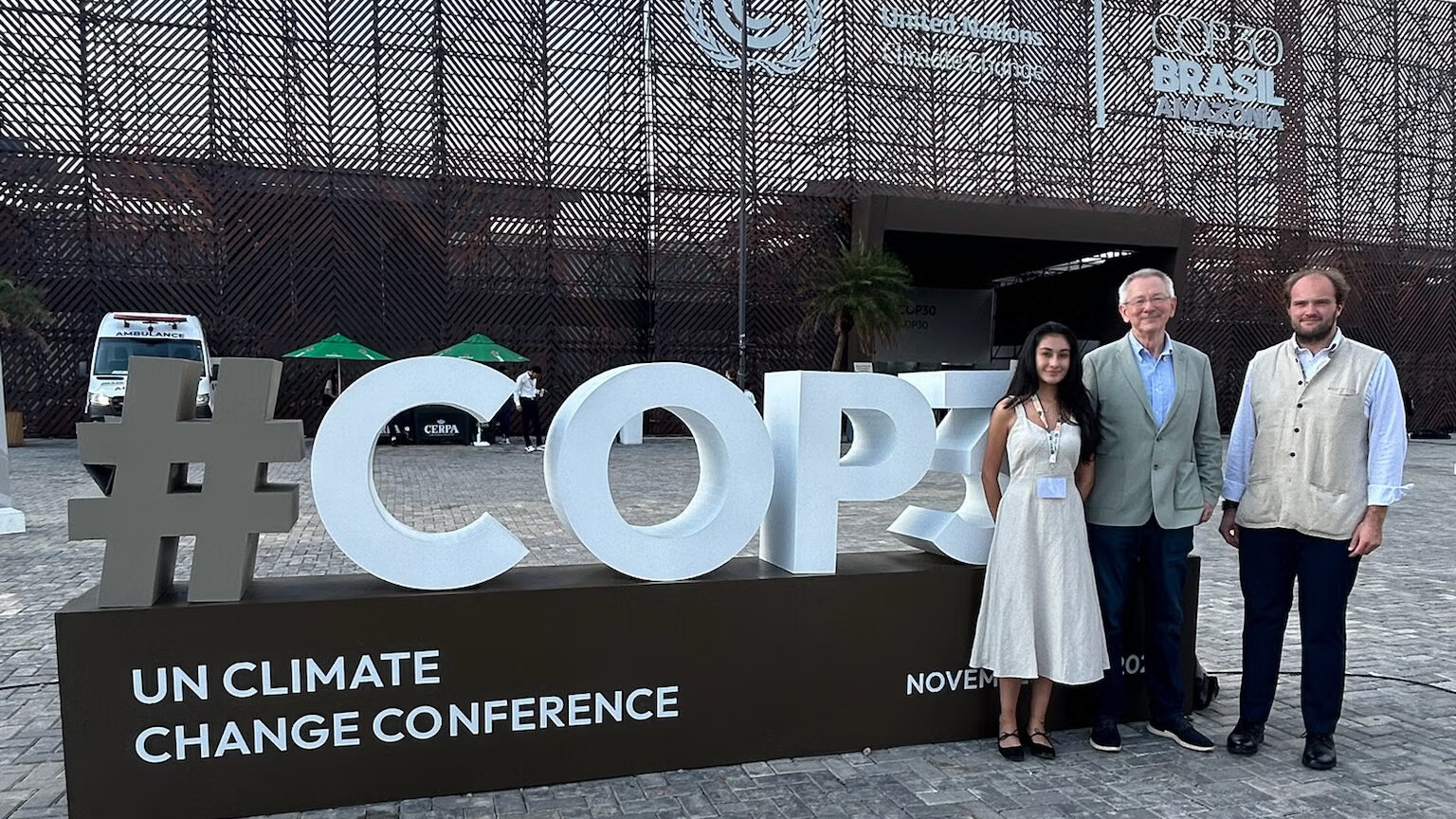
In November 2025, two Master of Science in Foreign Service (MSFS) students traveled deep into Amazonia to participate in the 30th United Nations Climate Change Conference (COP30) in Belém, Brazil. As part of Georgetown University’s delegation, Manon Fuchs (MSFS’26) and Clemente Gilardini (MSFS’26) joined world leaders, climate experts, civil society organizations, activists and private sector innovators to examine the most urgent environmental challenges facing the planet.

Fuchs and Gilardini are both in the science, technology and international affairs (STIA) concentration at MSFS. COP30 offered them an unmatched opportunity to witness global climate governance in action. Across panels, negotiations and impromptu conversations, both students gained insights that expanded their academic perspectives and shaped their professional aspirations. We spoke to them to get their reflections on their experiences and the lessons they brought back to the Hilltop.
Student reflections and lessons from COP30
What was the atmosphere like arriving at COP30 in Belém?
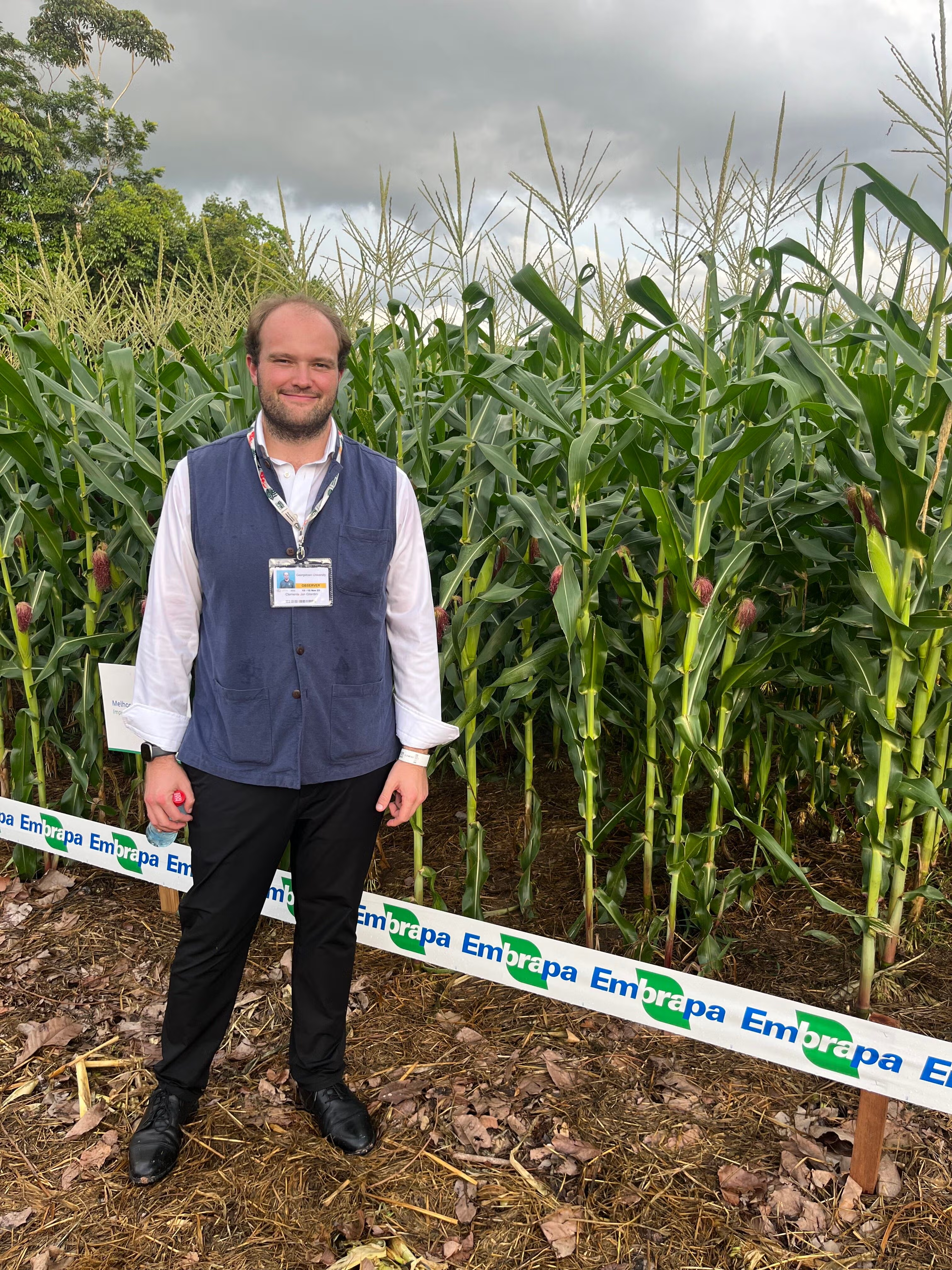
Gilardini
Arriving in Belém was intense. Aside from the significant heat, there was a lot of fanfare surrounding COP30’s location at the “Gateway to the Amazon.” Being there with the Georgetown delegation, I could see that this was a unique experience that only Brazil could host, largely due to the specific natural environment. The atmosphere was busy and exciting, setting a distinct tone for the days that followed.
Fuchs
The air in the COP pavilion hung heavy with heat and anticipation. As I moved from country to organization pavilions, drifting between the public and private sector, and weaving through booths where civil society groups and activists pleaded their case, it became clear that these many stakeholders arrived with a sense of determination. People were tired of the planning stage and the endless hypothetical conversations that defined earlier COPs. They wanted real movement. The words “action” and “implementation” surfaced at nearly every event, whether it was the Global Renewable Energy Hub’s panel on the urgent need to upgrade grid infrastructure or a discussion in the Climate Mobility pavilion on weaving climate displacement into future city planning.
What was a personal highlight for you?
Gilardini
The main highlight was the access to speakers. I had the opportunity to speak with panelists directly after their sessions, which isn’t always possible at events this size. A specific standout was meeting the Director General of the International Renewable Energy Agency (IRENA). On a personal level, simply being there on the ground for my first COP was exhilarating.
Fuchs
The lunch line often served as a venue for small talk. People standing near us or asking to join our table would inevitably ask about our delegation. Learning we had come with the Georgetown delegation, the response was often an emphatic: “Ah, so the U.S. is here after all!” It quickly became apparent to me that all around the world, people anticipated a small U.S. presence. This wasn’t the case at all. On our second day at COP, Governor Gavin Newsom held a brief talk at the Business Pavilion. For over an hour, American journalists, researchers, writers, podcasters, students and teachers stood shoulder to shoulder waiting to see him. Politics aside, it was clear that we had a real thirst to feel and know that U.S. leadership on climate action was still there. Of course, the audience turnout was not just a matter of support for the governor, but indicative of a deeper desire to see the country take real, visible action on climate change.
What are your key takeaways?
Gilardini
My overall impression is that there is significantly more work being done to mitigate climate change than what is typically reported in the news. While the remaining challenges are vast, it was clear that there are millions of people working daily to deliver solutions. My takeaway is that progress is happening at all levels, and it reinforced the importance of the global collective working towards a unified goal alongside the higher-level policy.
Fuchs
First, climate change is not a distant concept unfolding in the abstract. It is showing up in people’s daily lives. Its impacts are felt most intensely in rural communities, in developing countries and among those who lack the resources to build resilience. The global discourse often frames these countries as victims of the developed world’s years of unchecked emissions. While that framing is not wrong, it can be condescending if it ignores the real drive for action in these places. The conversations I heard had moved well past denial. The challenge now is access to capital.
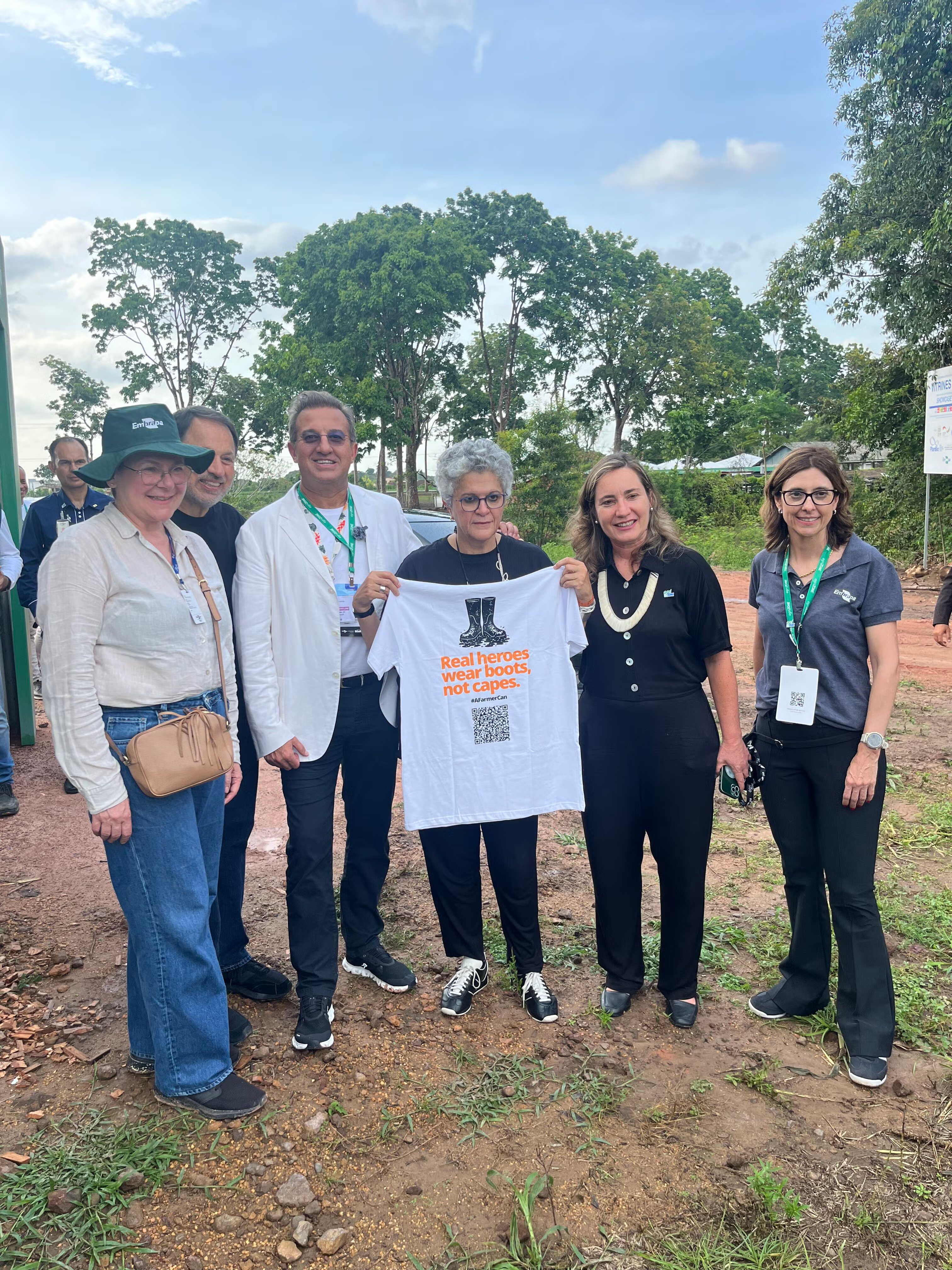
Second, financing a just transition will require a shift in narratives. Speaking with civil society groups working on the clean cooking transition in Tanzania, it was clear that reliance on biomass is not only an emissions issue but also a public health and economic crisis that disproportionately affects women. Similarly, the NDC Partnership stressed the need to broaden the framing around food waste. Instead of treating it purely as a climate issue, they argued for positioning it as a development opportunity. If we want the public and private sectors to work together, if we want to help countries finance their NDCs and meet their Paris Agreement commitments, we must learn to speak the language of investors. That means explaining why these investments make sense and how they improve people’s quality of life and productivity.
Finally, it is worth talking to everyone. Civil society groups repeatedly said their greatest obstacle is getting the Global North to understand the urgency of their challenges, especially those representing women and Indigenous peoples. Private sector representatives voiced a different frustration. They insisted that capital exists, but that they lack the support from local governments and NGOs needed to make investments feasible and to de-risk them. Country delegations emphasized that climate action is inherently political and urged scientists to adjust their strategies, moving beyond numbers toward messaging that can secure buy-in. Scientists, meanwhile, expressed deep frustration with not being heard, even after presenting data showing that global warming is likely to reach four degrees Celsius by the end of the century.
What were your expectations going into the conference vs. the reality?
Gilardini
My expectations were completely reset upon arrival. The sheer number of people and the diversity of perspectives were overwhelming. I went in thinking I was well-versed in energy topics, but nearly every panel introduced ideas and ways of thinking about the challenges and their solutions in ways that I hadn’t encountered before. It challenged my existing narrative and showed me that there is still much more to learn about the complexities of not just the energy transition, but how we talk about electricity, renewables, batteries and all the other key elements, as there is this push to decarbonise our economies.
Fuchs
One often hears that COP is a place of radicalization, and I went into the conference with this expectation. I disagree. The radicalization did not hit me in the sweltering Blue Zone or during the panels. It hit me on the plane home, flipping through my notebook, sitting with my frustration, my exhaustion and asking myself what exactly I was supposed to do with everything I had heard and seen. The high-level speakers and passionate scientists at COP know their audiences already agree with them. The real tension, the politicized disagreement, happens in the slower-paced back-room negotiations where diplomats go line by line, amending their plans to confront climate change at a snail’s pace. The questions that stayed with me were less about the headline moments and more about the gaps. What does it mean to sit at the intersection of science, policy and politics without losing your mind or your conviction? And how do I take these indescribable feelings and convey them to someone who doesn’t even know what COP is or why it matters?
How did this experience add to your classroom learning?
Gilardini
I observed how the private sector is often driving innovation where governments may be slower to act. Companies are realizing that cleaning up operations is not just the right thing to do, but beneficial for their bottom line. In a hyper-competitive global market, climate-smart business strategies are becoming a standard requirement. Seeing these market forces in action was exciting and it really complemented the theory that I’ve been learning about over my time at Georgetown.
Fuchs
Climate change is a single crisis that confronts us all. Within this fight, there are hundreds, if not thousands, of careers and roles one could take to mitigate it. In an MSFS STIA course, one attempts to traverse the line between science and policy, making the high-level research and convictions of the scientific community digestible for the average policymaker. But COP showed me there’s more to this work than just that. Some spent their whole careers focusing on food waste, others on urban design and its intersection with climate-related disaster, on carbon markets and decarbonizing maritime shipping – it became clear I’d have to find my niche.
Where did you find hope amid “climate anxiety”?
Gilardini
I found optimism in the sheer volume of technologies currently being tested, from CO2 removal to efficiency improvements. A lot of this work happens behind the scenes, and while the progress might be slow – it is very much real. It was also encouraging to see so many professionals dedicated to global climate goals. Witnessing that commitment to a cause larger than any single individual or country can only be described as inspiring.
Fuchs
My fellow Georgetown delegates came to this conference for very different reasons. Clemente arrived with a drive to understand how the private sector aims to innovate and finance the energy transition. Amineh Najam-ud-din, an M.S. in Environment and International Affairs student, carried a deep commitment to loss and damages and the urgent questions around not just mitigation but adapting to a world where climate change is destroying lives and ecosystems. Mason, an M.A. in Latin American Studies student, brought a passion for migration, Indigenous communities and the ways climate change is reshaping Latin America. These are the people who gave me hope.
Seeing us come together with one shared purpose, despite our varied backgrounds, made something click for me. Tackling climate change will never be the work of one discipline or one type of thinker. It will require people who care about finance, justice, technology, displacement or governance, all sitting at the same table. Watching that play out in real time reminded me that the work is bigger than the anxiety it creates and that we are not doing it alone.
Looking ahead
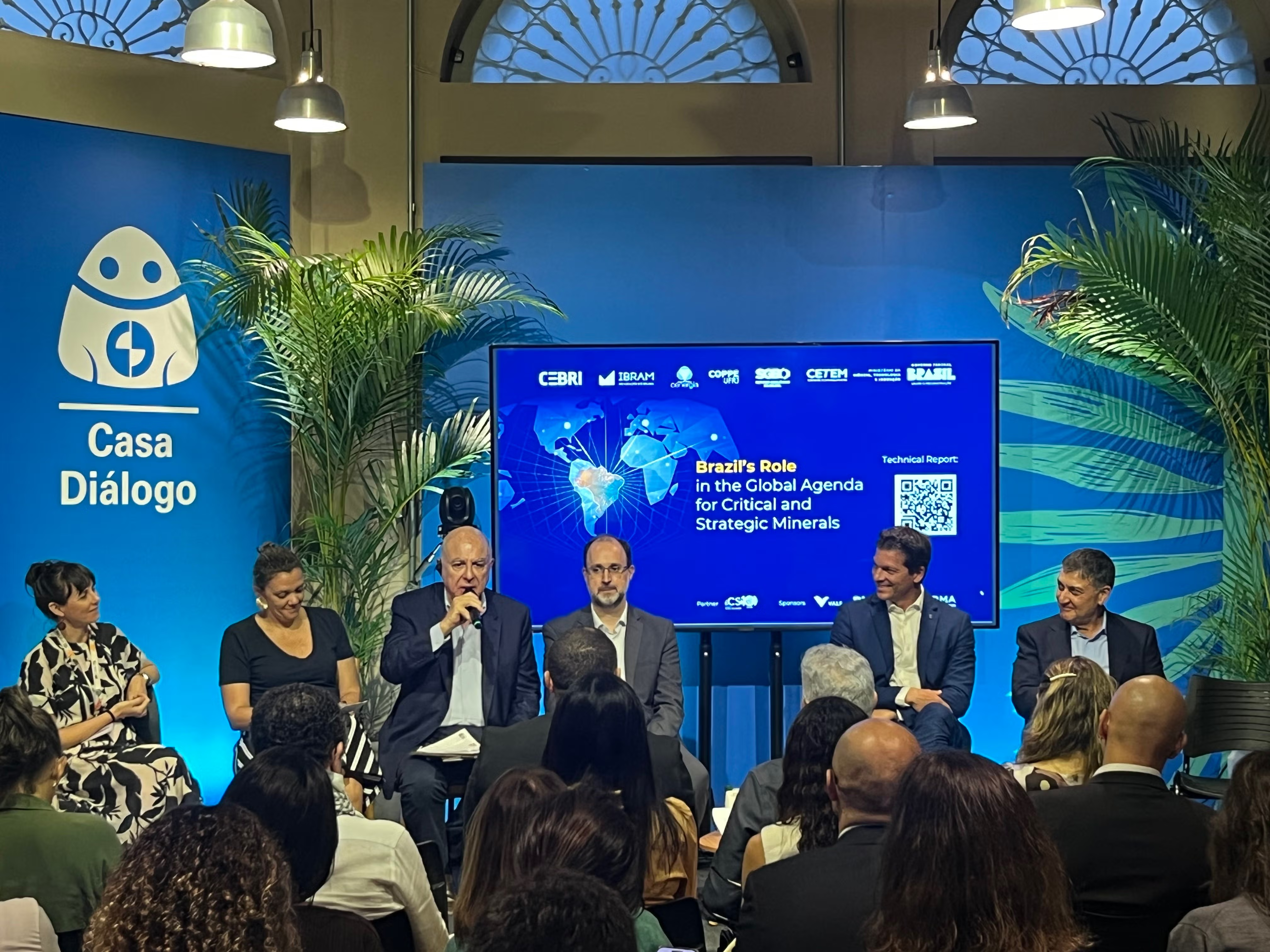
For Manon Fuchs and Clemente Gilardini, COP30 was more than a global summit—it was a turning point in their academic journeys and a catalyst for their emerging careers. The week in Belém deepened their understanding of climate policy, expanded their professional networks and revealed new pathways for meaningful impact.
As Georgetown prepares future cohorts of climate-focused practitioners, the reflections of this delegation underscore the value of experiential learning at the heart of MSFS. COP30 reminded them—and all of us—that while the challenges ahead are formidable, the global effort to build a more sustainable future is vibrant, collaborative and very much active and alive.
Written by Miriam Friedman