
This year, SFS’s Center for Contemporary Arab Studies (CCAS) celebrates its 50th anniversary. In this series, we’re commemorating the center’s impact and legacy by highlighting current students and alumni as well as past and present faculty. Their stories reflect CCAS’s dedication to understanding the complexities of the Arab world and engaging with the region in thoughtful and ethical ways.

The Master of Arts in Arab Studies (MAAS) program set Greta Scharnweber (MAAS’01) on a 20-year career leading interdisciplinary efforts in international higher education and international affairs. For the past eight years, she has served as the director of the Fulbright Visiting Scholars Program through her role at the Institute of International Education.
We spoke to Scharnweber about what led her to the MAAS program, lessons from her global career and her advice for students pursuing Arab studies and careers in international education.
Discovering Arabic and the Middle East
Scharnweber’s interest in the Middle East and the Arabic language was first sparked as an undergraduate studying religion and anthropology at Kenyon College. Her advisor encouraged her to spend a summer taking Arabic at the University of Michigan, and then she studied abroad in Morocco. After only finding Hijazi dialect courses while a graduate student at the University of Colorado, she found herself searching for better ways to learn Arabic.
“When I learned of the MAAS program, it seemed to be the perfect opportunity to finally get serious about learning Modern Standard Arabic to the fullest extent,” she says. The program’s concentration in culture and society further cemented her decision to apply.

More broadly, her undergraduate studies made her aware of the prevalence of inaccurate or decontextualized information about the region and about Islam—both in educational settings and in popular media.
“Wanting to correct that misinformation drove me to study abroad and study Arabic, which ultimately led me to the MAAS program and to a career in support of international education and cultural exchange.”
Greta Scharnweber (MAAS’01)
Building a career in global education
The academic foundation in Arabic and Middle Eastern studies, Scharnweber emphasizes, has been central to her career at every stage. She describes it as her personal and professional “why.”
“The MAAS curriculum, with its inter- and cross-disciplinary training in the social sciences and humanities, taught me to value cultural and historical context in any topic of inquiry,” she says. Whether in her first professional post at the Ford Foundation, her roles at Yale University and New York University or her current work at the Institute of International Education (Fulbright), the ability to think critically across disciplines and to respect and learn from cultural differences has been key.
Throughout her career, Scharnweber has applied these lessons in a variety of ways, primarily through the thoughtful curation of educational programming—for audiences ranging from K-12 teachers and graduate students to university faculty and the general public.
Building on that interdisciplinary foundation, the MAAS program also introduced her to the world of education policy and infrastructure, particularly Title VI and the Department of Education’s National Resource Centers (NRCs). Scharnweber went on to lead Middle East Studies NRCs at higher education institutions for nearly 15 years, first at Yale as outreach director for the Council on Middle East Studies at the MacMillan Center and later at NYU as associate director of the Hagop Kevorkian Center for Near Eastern Studies.
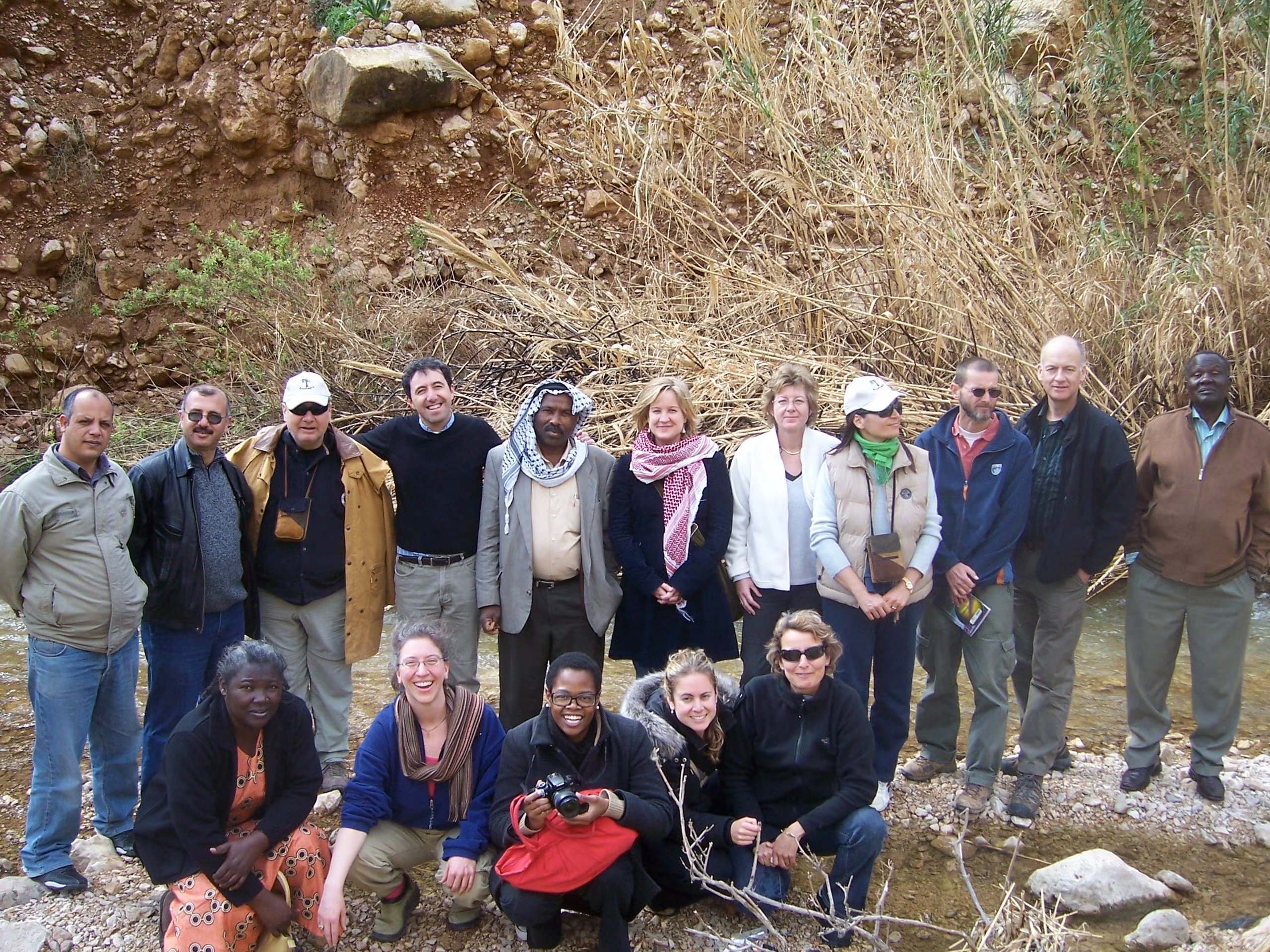

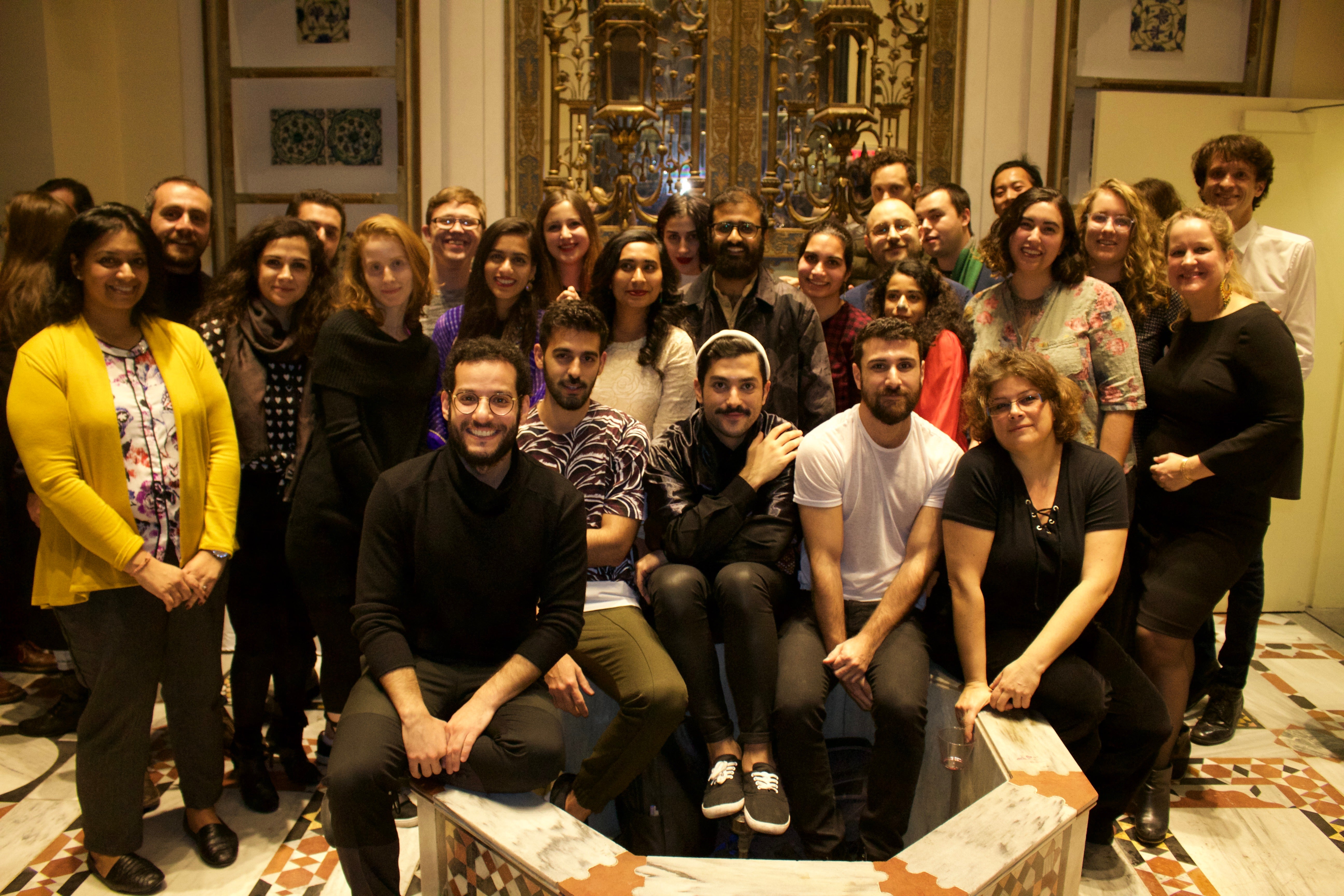
Today, she directs the Fulbright Visiting Scholars Program, synthesizing her expertise in project management, curriculum development and educational leadership while monitoring emerging trends in higher education. In this role, she works to strengthen global academic exchange, intercultural understanding and academic excellence.
While she doesn’t regularly use her Arabic language skills in her day-to-day work, Scharnweber embraces the moments when they resurface.
“I enjoy when I get the chance to dust off my vocabulary when meeting with Fulbright colleagues who support participants from Arabic-speaking countries, or when I meet Fulbrighters who come from the Arab World at our enrichment seminars,” she says.
Advice for the next generation
Scharnweber says the MAAS program was an ideal avenue for deepening her understanding of U.S. foreign policy in the Middle East.
“The MAAS program and CCAS is a special place in that it takes the study of Arabic and the Middle East seriously, but also because it is connected to the Washington, DC, environment,” she says. Scharnweber’s current work for Fulbright often brings her back to Washington, DC, given her close collaboration with colleagues at the U.S. Department of State, the sponsor of the Fulbright Program.
For students interested in international studies, Scharnweber encourages seeking early career opportunities to learn, work and live internationally for extended periods. She especially encourages MAAS graduates to apply for a Fulbright, which has opportunities for Americans as well as citizens of more than 100 countries and at various career stages from students to scholars.
“It can get harder to move around as you amass more of life’s responsibilities,” she notes. “Whether the United States is your home or you hail from another country, the lessons you’ll learn through the discomfort and challenge of adjusting to new contexts will serve you well and in unpredictable ways no matter your career path.”
