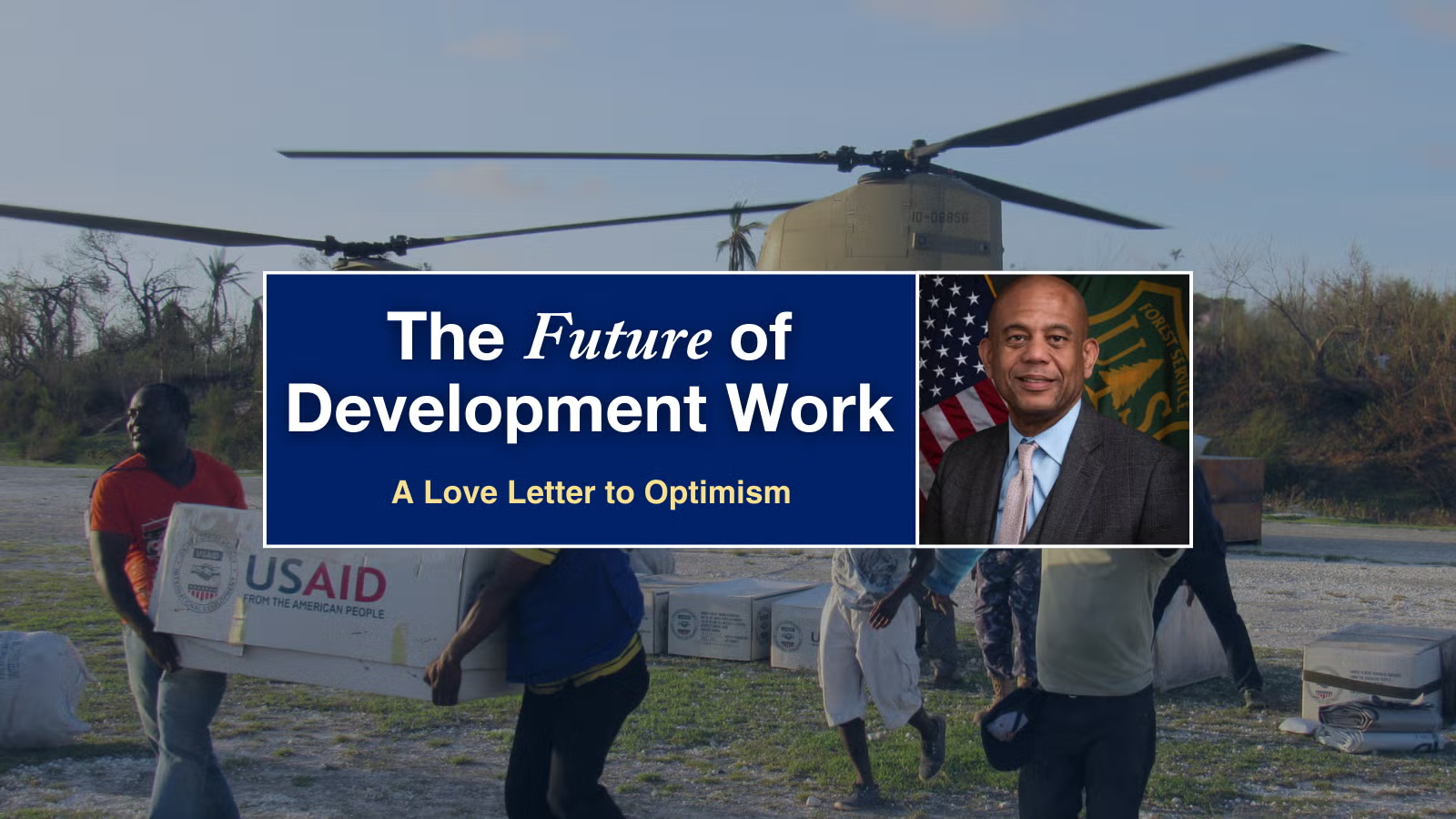
With the closure of the U.S. Agency for International Development (USAID) in July 2025, many in the international development sector have worked hard to pivot, using their skills and experience in different ways to continue to improve lives. In the Future of Development Work series, SFS faculty weigh in on the ways in which international development professionals can continue to thrive and build careers of impact.
Gary Barrett, adjunct professor in the Global Human Development (GHD) program and director of the USDA Forest Service National Partnership Office, is a former deputy director and senior advisor of the U.S. Agency for International Development’s Office of American Schools and Hospitals Abroad (ASHA) and a former senior program advisor and senior field program manager for the USAID Office of Transition Initiatives (OTI) in Afghanistan. He previously served with the United Nations World Food Programme (WFP) as the head of office for the UN Joint Logistics Centre (UNJLC) in South Sudan. Here, Barrett, who is also a veteran of the U.S. Marine Corps, lays out his appreciation for the work of development professionals and points to a future he still believes is bright.
The world has known the hollow quiet that follows retreat. Clinics once staffed sit empty. Classrooms lack books. Communities that thrived with a steady hand of support now wait, uncertain, for what comes next. Over the past year, the global development sector has lived through profound loss. With the closure of USAID, the removal of its missions and the retraction of American resources abroad, a cornerstone of international engagement has faltered. Where the United States once symbolized partnership and possibility, uncertainty has taken hold.
The withdrawal has left more than a policy vacuum; it has shaken confidence in the goodwill of the American people themselves. Our adversaries have recognized the opportunity and have quickly filled the void, reshaping global narratives and relationships that once rested on the foundation of trust built through generations of sacrifice and sweat equity of American development and humanitarian work. For countless communities, the retreat and, in many cases, disappearance of American engagement has meant real consequences, such as increases in mortality from disease, setbacks in economic growth, declines in health outcomes and the erosion of local capacity that took decades—and in some instances, American lives—to strengthen.
As a professional who worked for USAID, I have seen both the triumphs and the frustrations of this system. I understand the inefficiencies that were present and the bureaucratic limits that affected outcomes. Yet I also know what it meant. Behind every program metric, dollar spent and project report was a team of people who believed in the simple idea that helping others serves not only a moral purpose but also forwards national interests.
To my former colleagues, the development professionals, humanitarian officers, diplomats and contractors, I offer profound gratitude. You gave your energy, intellect and compassion to make the world a little better than how you found it. You worked through the nights of crisis response, tended to needs in climates of conflict and built partnerships where few thought any could exist. You carried the best of what our country could offer: hope. You demonstrated the conviction that human progress anywhere strengthens peace everywhere. Your services are still needed.
As someone who now teaches the next generation of global practitioners, I can say with confidence that your legacy endures. There are children alive today because of the work we did. There are families whose income rose, women who claimed new opportunities and communities that found resilience in the face of crisis. Some of those places may never appear in headlines or on maps in American classrooms, but the lives changed there are proof that our efforts mattered. I saw firsthand, and we made it possible.
What comes next cannot be a restoration of the old system as it stood. The future demands reinvention. Across the world, the same talented professionals who once served with USAID and other agencies are reimagining development beyond institutional walls. They are building community-owned initiatives, partnering with local entrepreneurs and designing more agile systems that respond directly to people’s realities rather than bureaucratic timelines. The absence of American government funding, while tragic, has freed many to create new models of partnership and private sector investment that uplift rather than prescribe.
This is the beginning of the new frontier of global development: less hierarchical, more cooperative and far more accountable. It is fueled by the same passion and values that drew so many of us to public service, including empathy, integrity and an unshakeable belief in human potential. If the last year has exposed the vulnerabilities and flaws of our old approach, it has also reminded us that institutions are fragile, but the spirit of service transcends institutions.
The world still hungers for American ideals such as compassion, courage and ingenuity. Those ideals may have receded from the headlines and even feel extinguished, but they are not forgotten. With humility and renewed purpose, the United States can rebuild trust, mend bridges with allies and work alongside global partners to restore development as an instrument of cooperation rather than competition.
Soft power has never been about dominance. It is about decency, the quiet knowing that influence earned through kindness endures longer than influence imposed by force. The best diplomacy has never been conducted in embassies alone. It has been written in the stories of the people whose lives were changed because development professionals showed up to help.
For all of the challenges that confront us, I remain profoundly optimistic. America has reinvented its purpose before and can do so again. History offers a clear truth: never bet against the ability of the United States to eventually get it right. When we combine reflection with resolve and humility with innovation, we find our way back, not to dominance, but to leadership that others trust. The next chapter of development is bright and will be written through cooperation, courage and optimism. And I, for one, still believe.