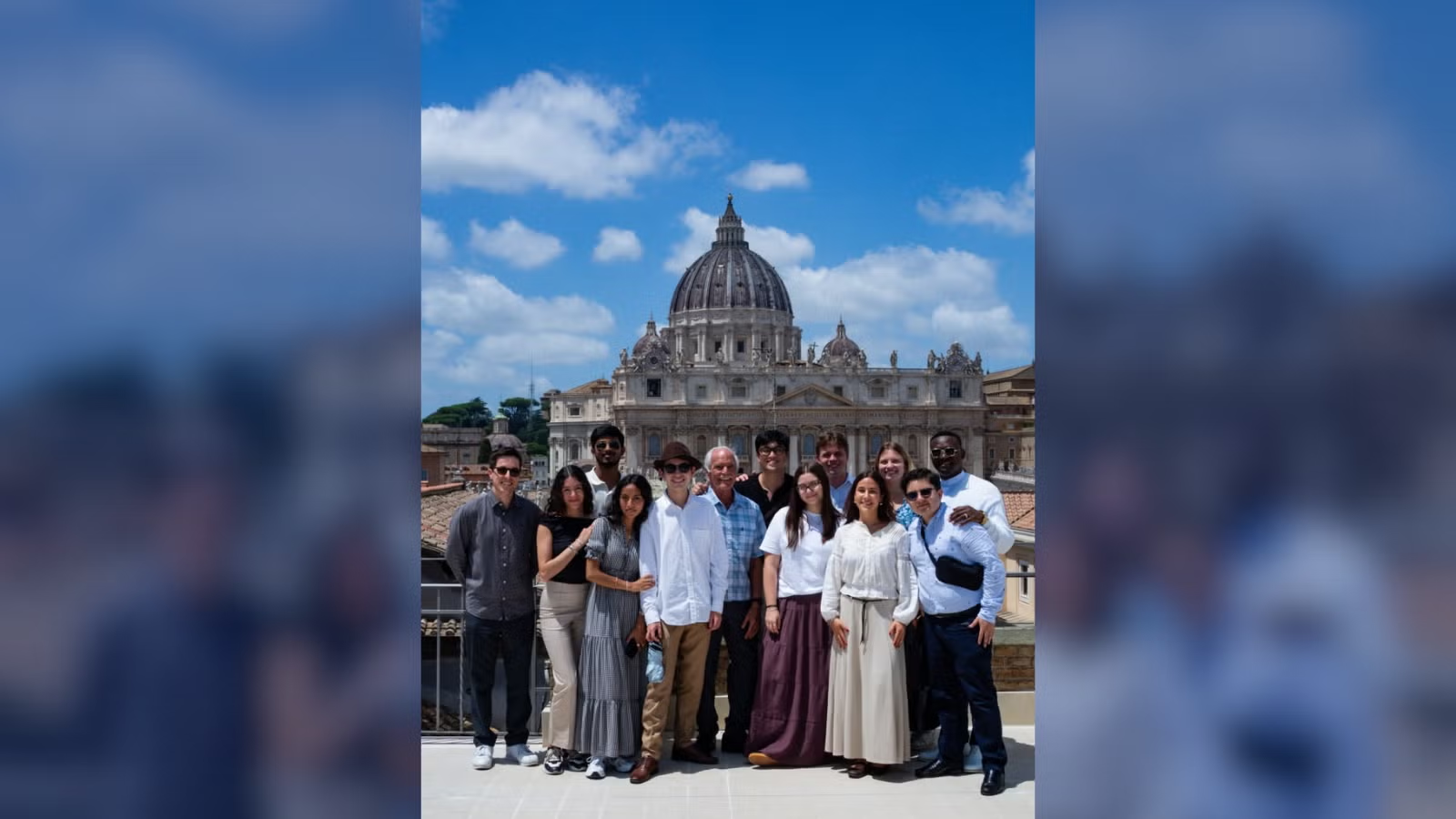
Cross-cultural dialogue sits at the heart of an SFS education, and Georgetown offers students multiple avenues to practice it beyond the classroom. One of these opportunities is the IAJU Global Citizenship Fellows Program—hosted by the International Association of Jesuit Universities (IAJU) and Georgetown’s Berkley Center for Religion, Peace, and World Affairs—which brings together a select group of students from across the global Jesuit network to put global citizenship into practice.
Henry Albrecht (SFS’28), a member of the 2025-2026 cohort, engaged in months of virtual dialogues with international peers before traveling to Rome this past May for an intensive on-site study trip.
We spoke to Albrecht about how Jesuit values shape his Georgetown experience and how learning to communicate across differences is preparing him for a career in international politics.
Q. Your gap year working at a refugee support center in Germany sparked your interest in global cooperation. What drew you to SFS to study international politics?
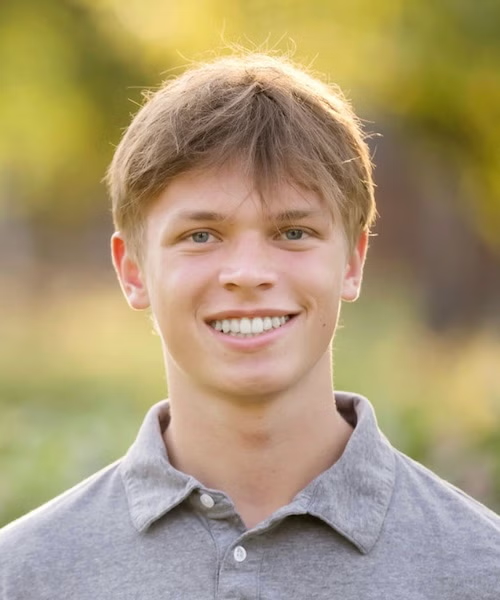
A. Before I took my gap year, I really had no idea what I wanted to do or study and was leaning towards studying engineering in Germany. It was only after I began working in the refugee support center that I seriously considered studying international politics. Through my experiences, I learned a lot about international cooperation, particularly regarding refugees in the EU, with two main realizations specifically drawing me to study in the SFS. The first was seeing how complicated international cooperation was. I recognized the difficulty of coordinating across borders and legislation. I felt that even systems in the EU, one of the best examples of international cooperation, were, in some ways, inefficient and unjust. From my perspective, these systems will always have room for improvement, and I am very interested in how they could be improved. The other thing I realized was the extent to which successful global cooperation could improve lives. Many of our clients’ lives were made significantly more difficult through ineffective cooperation between nations. I believe that if states could work together more effectively, we would not only be able to better accommodate refugees, but also solve many other problems that cause suffering in our world today. I hope to use my SFS education to improve lives by increasing global cooperation.
Q. Why did you decide to join the Global Citizenship Fellows Program, and how did you hope it would challenge your understanding of what it means to be a global citizen?
A. I saw the Global Citizenship Fellows Program as an exciting opportunity to learn from and interact with those from all around the world, as well as a great supplement to my coursework. It seemed like a very unique opportunity to discuss geopolitical issues with students from different cultures who have all learned in different environments. One of my main goals for the program was to learn as much as possible from other students. I hoped I would be opened up to new perspectives that I would otherwise have had difficulty understanding or that I might not face at Georgetown. I was also interested in how our different backgrounds and cultures might clash and what conflicts might arise from our differences. While I certainly believed in global citizenship and duty to others going into the program, I wanted to test the ability to connect and compromise, even without many similarities to rely on. I felt that our experiences may shed light on how realistic cosmopolitan citizenship actually is.
Q. Before going to Rome, you participated in virtual dialogues with peers worldwide, followed by intense dialogue workshops on-site. What was it like navigating those challenging conversations, and what key communication or active listening skills did you take away?
A. Going into the program, I really wasn’t sure what to expect and wondered what type of arguments might be sparked from these conversations. However, I was pleasantly surprised by our group’s ability to discuss and disagree, even on challenging topics, while simultaneously respecting and learning from each other. I think we were able to do this so effectively because all of us were genuinely interested in learning from one another and had little intention of being proven “right.” Additionally, the dialogue workshops taught us to listen effectively and communicate that we were listening, making our conversations more productive. The dialogue workshops were ultimately some of my favorite activities during the study tour. They served as a great reminder that good listening is a difficult but important skill for effective dialogue and that understanding someone’s background and story makes it much easier to have an open discussion. It has also made me very optimistic about the possibilities of dialogue when both sides are genuinely open to it.
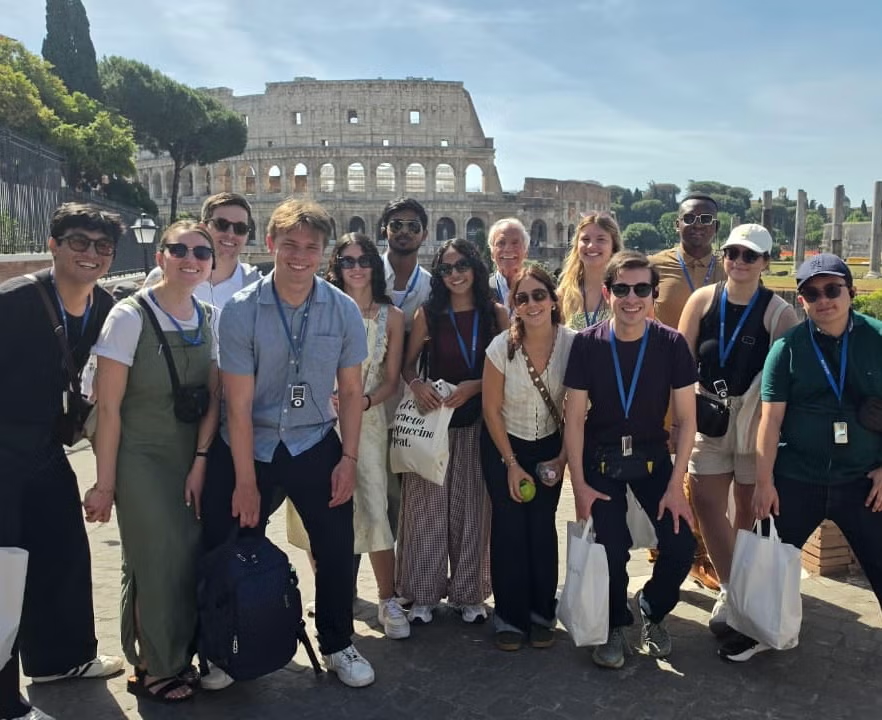
Q. What were some of the highlights of the Rome tour for you, and why did they stick with you?
A. I think my biggest highlights are definitely the dinner conversations we had. Every night of the week, we had group dinners that lasted hours, with conversation flowing effortlessly. I had so many questions to ask others about their lives back home, their opinions on global issues and their personal experiences. Other members of the group asked me the same type of questions. It was at these dinners that I feel we really bonded as a group and got to know each other. We all became good friends so much quicker than I expected, and it felt like our differences brought us together more than anything. We also got to see the city of Rome as a group, with site visits to the Colosseum, the Vatican Museum, St. Peter’s Square, the Jesuit Curia and other monuments. It was very exciting to have these experiences with such a diverse group and hear what these locations meant to people from around the world.
Q. How would you explain what it means to study at a Jesuit university to a high schooler considering all their options?
A. For me, I don’t feel that the Jesuit identity of our university is something seen every day but is instead something in the background that shapes the values and goals of our education. For example, our broad course requirements reflect the value of cura personalis, but non-Jesuit universities might choose to have broad course requirements as well. I think that there are some great classes available that are rooted in the Jesuit values. For example, the class that I took that qualified me for this program was called Religion and Ethics in International Affairs and was taught by a Jesuit. Moreover, it seems there are events and opportunities for those who want to have a close connection to Jesuit tradition on campus. However, I personally am not Catholic and never felt like I needed to be to enjoy the Jesuit values and opportunities offered on campus. In summary, I think the experiences of studying at a Jesuit university like Georgetown probably vary from person to person depending on what they want to make out of it.
Q. How do you see the lessons from this fellowship—especially the focus on cross-cultural dialogue—influencing your SFS coursework and your career goals?
A. I think the biggest takeaway I’ve had from this program is a greater feeling of hope for politics and international cooperation. I feel that international politics, in theory and in practice, can be quite cynical, often leading to doubts about the extent to which long-term cooperation really is possible. Especially in light of recent events, I came into the study tour relatively pessimistic about what international relations could look like in the coming years. Additionally, I thought that making friends during this trip would be a slow process, impaired by differences in values and cultures. Instead, I was pleasantly surprised by how much we shared in common, no matter where we came from. The ease with which we connected has made me much more optimistic about what is possible in international cooperation and diplomacy. I hope to hold on to this optimism throughout my career and use the skills and lessons learned during this study tour to facilitate effective global cooperation.