
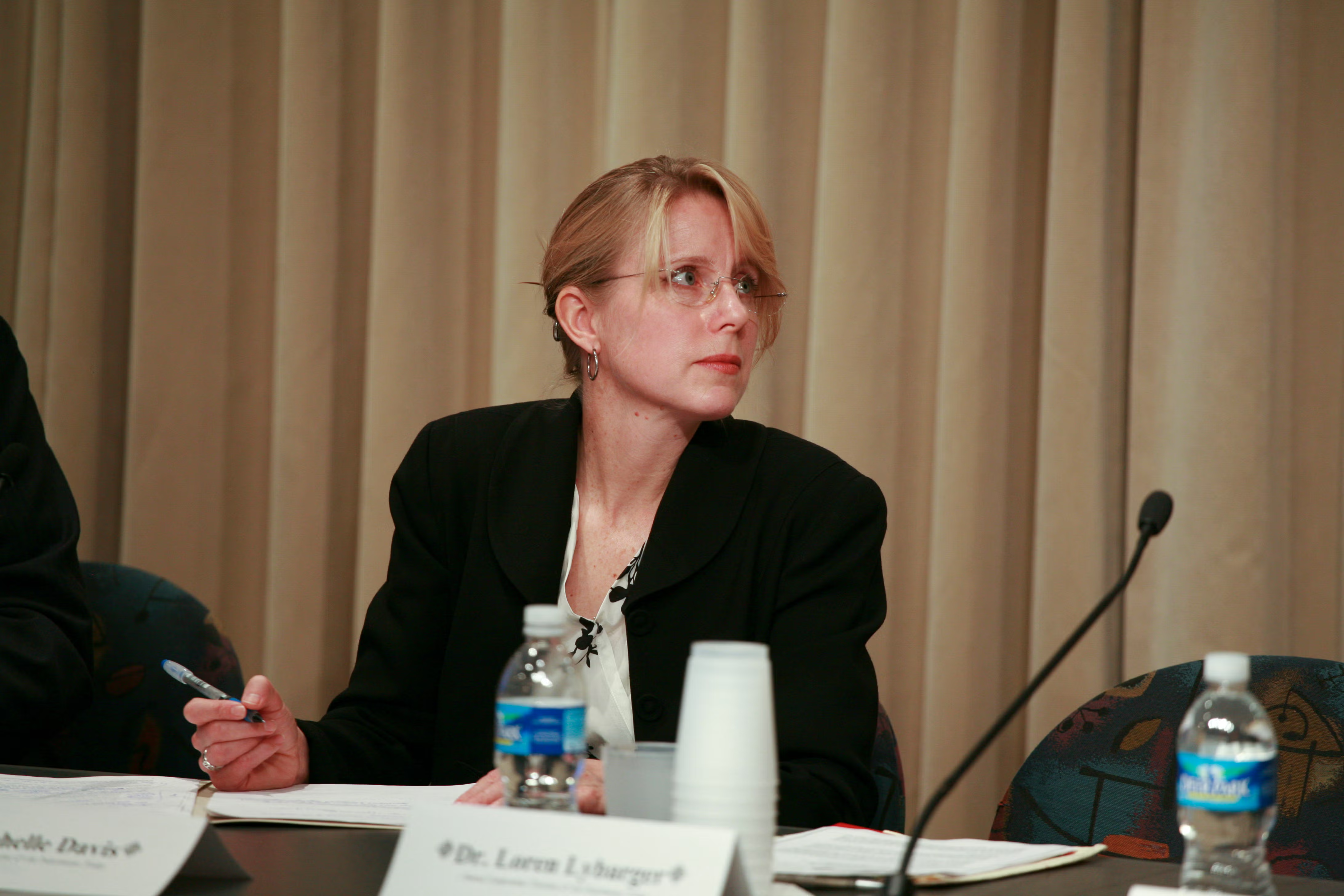
“I’ve been in CCAS for over 20 years and the thing I’m most proud of is how we build community among our students, staff, faculty and followers to welcome difference, learn broadly and in depth and support each other,” says Professor Rochelle Davis, Sultanate of Oman Chair and associate professor in the School of Foreign Service.
Davis is not alone in celebrating the community that is the heart of the Center for Contemporary Arab Studies’ (CCAS) academic life. Since its founding in 1975, CCAS has served as a resource for academics, diplomats, policy makers and business professionals to understand the complexities of the Arab world and engage with the region in thoughtful and ethical ways. One of the first of its kind in an American university, the center has carved out a space for itself against a backdrop of political disagreement and negative perceptions of the Arab world by many Americans.
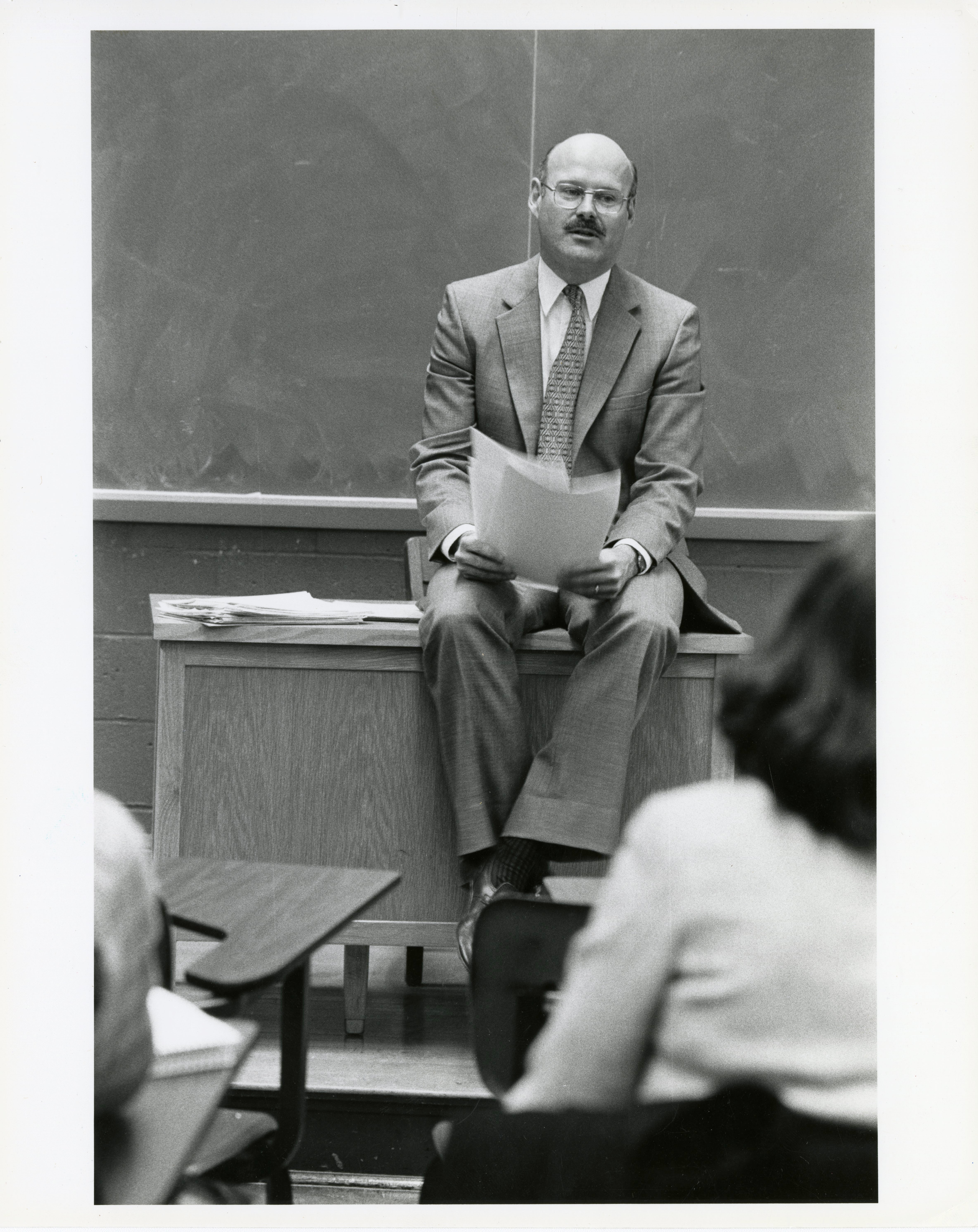
Professor Emeritus Michael Hudson (1938-2021) was one of the founders of CCAS and served several terms as CCAS director. He wrote during the center’s early years about the challenges it faced: “Is it possible for a relatively small, though prestigious, university to support a comprehensive program devoted to such an ‘exotic’ area? Is it possible, given the present financial crisis in American higher education, to launch a necessarily expensive program concerned with this region, one whose success must be measured essentially in qualitative rather than quantitative terms? We at the Center for Contemporary Arab Studies at Georgetown believe the answer to all three questions is an unequivocal ‘yes.’”
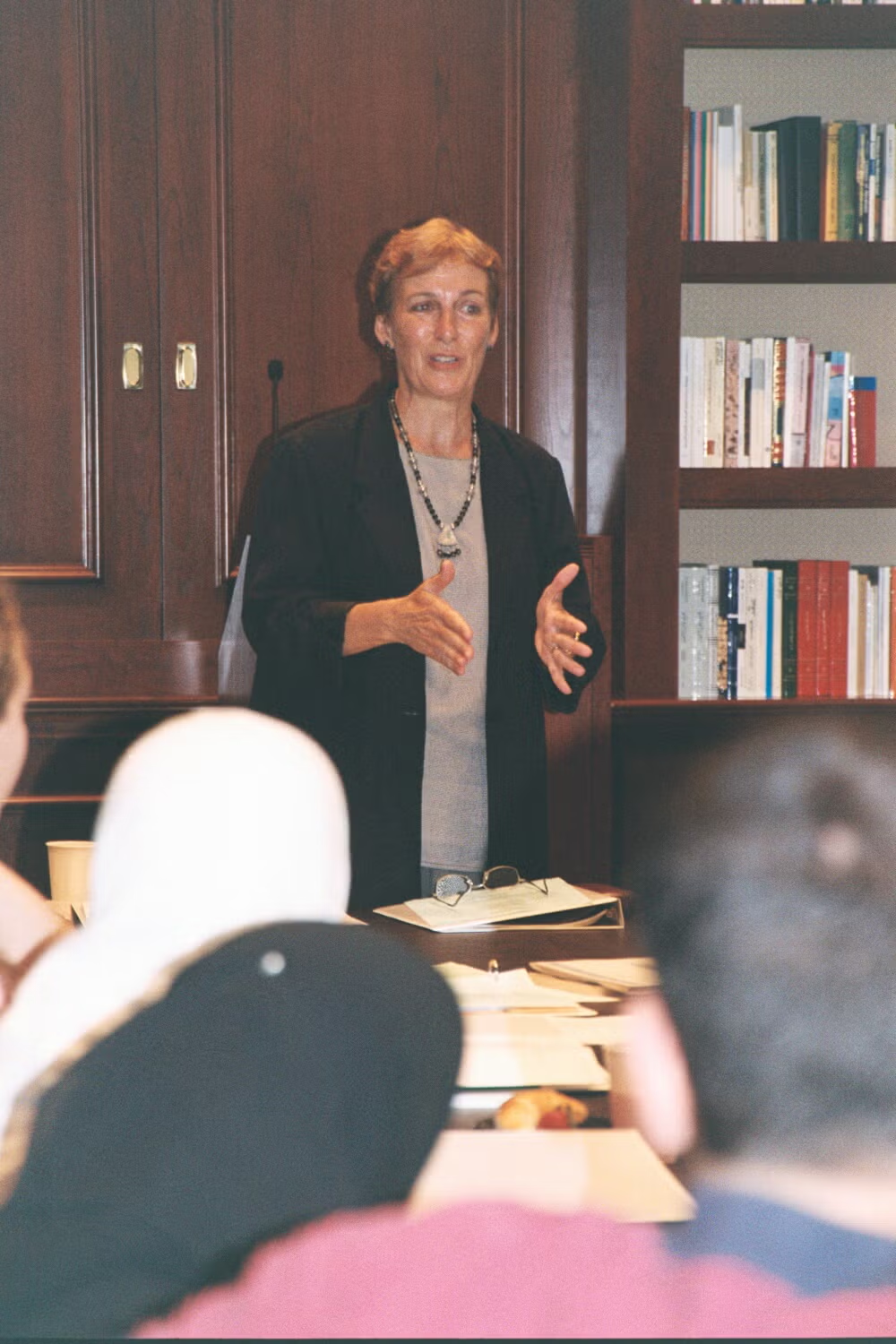
Professor Emerita Judith Tucker spent over four decades as a professor of history in the Center for Contemporary Arab Studies, beginning in 1983, only eight years after the center was founded. She reflects, “The mission of supporting the best possible scholarship, teaching and public programming on the Arab World has endured, but the world around us has shifted in ways that cannot but affect us.”
Emphasis on the Arabic language
Though much has changed globally since 1975, one thing that has not changed for CCAS is the emphasis on the Arabic language as a core tenet of the academic program. Professor Fida Adely, the Clovis and Hala Salaam Maksoud Chair in Arab Studies and associate professor and the current director of the Center for Contemporary Arab Studies, says of the language focus: “From its inception, CCAS has been committed to centering perspectives, experiences and knowledge production from the region. By definition, this requires fluency in the Arabic language.”
Professor Joseph Sassoon, professor of history and political economy at CCAS agrees: “I think language is really critical. As faculty, one of the biggest criticisms we have of so many people writing about the Arab world is the lack of knowledge.”

From the matriculation of its first class in 1978, the Master of Arts in Arab Studies has required advanced Arabic language proficiency for graduation. This was unique at the time. Tucker explains: “This does not sound revelatory, but at the time—and up to now—academic programs focused on the Middle East at many other institutions did not require such language study. We were also fortunate at Georgetown that we were, and are, supported by an exceptionally strong department of Arabic.”
Davis points to understanding sources in their original form as a key reason for the emphasis: “Arabic is essential for students and faculty, out of respect for the vast knowledge production that is done in Arabic—whether that is intellectuals theorizing about politics, state, society, culture or artists creating films or writers composing literature or policy-makers producing material on governance structures and laws.”
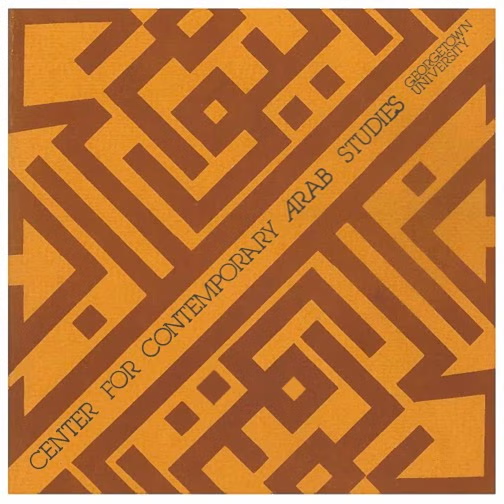
Arabic has also been central to the visual identity of CCAS. Adely explains: “One of the first things the center’s leadership did in the 1970s was to commission Kamal Boullata, a prominent Palestinian artist and art historian, to create a logo for the center. Boullata sketched a diamond-shaped calligraphic depiction of the words العرب اليوم [al-‘Arab al-Yawm], which means ‘the Arabs today.’ This continues to be CCAS’s logo today.”
Public outreach to inform the broader public
One of the important ways that CCAS executes its mission to educate the broader public is by offering a robust schedule of public programming. From the center’s first symposium in April 1976 during which they discussed the dynamics of Arab-U.S. economic relations to a series of lectures, panels, and symposia in 2011 and 2012 to examine the causes, trajectories and implications of the Arab Spring, events have been an important venue for CCAS.
“Given the center’s mission to educate diverse audiences—students, K-12 educators and a broader public—responding to current developments in the region has been core to this work,” Adely says.
Davis highlights the importance of institutional support for this part of the CCAS mission: “Georgetown University’s willingness to engage in global affairs and protect academic freedom also means that we have been able to offer public events that broaden all of our knowledge, push us to consider different views and allow us to celebrate the diversity of humanity and creativity.”
Tucker points to events that respond to major developments in the region as part of the support that CCAS provides to its students: “Many of our students have close ties to the region, and it has been important for CCAS to support them when events like the U.S. invasion of Iraq, the reversals of the Arab Spring or the genocide in Gaza have been the source of deep concern and emotional pain for them. Programming that examines these events closely is part of that support along with pastoral care.”
Highlighting the richness of Arab culture
Highlighting the richness of Arab culture has also remained a focus throughout the 50-year history of CCAS. Adely believes this is part of providing a holistic understanding of the region.
“While we must respond to political developments and contemporary crises in the region, there is so much more to know and understand about the Arab world. It is so critical to know the region as a place beyond geopolitics, conflict or U.S. security interests,” Adely says.
Tucker sees it as an important counterbalance to negative perceptions of the region: “The insistence on the study of history and culture and CCAS programming that features a range of Arab cultural achievement has long militated against distorted views of the region as reducible to a place of instability and conflict.”
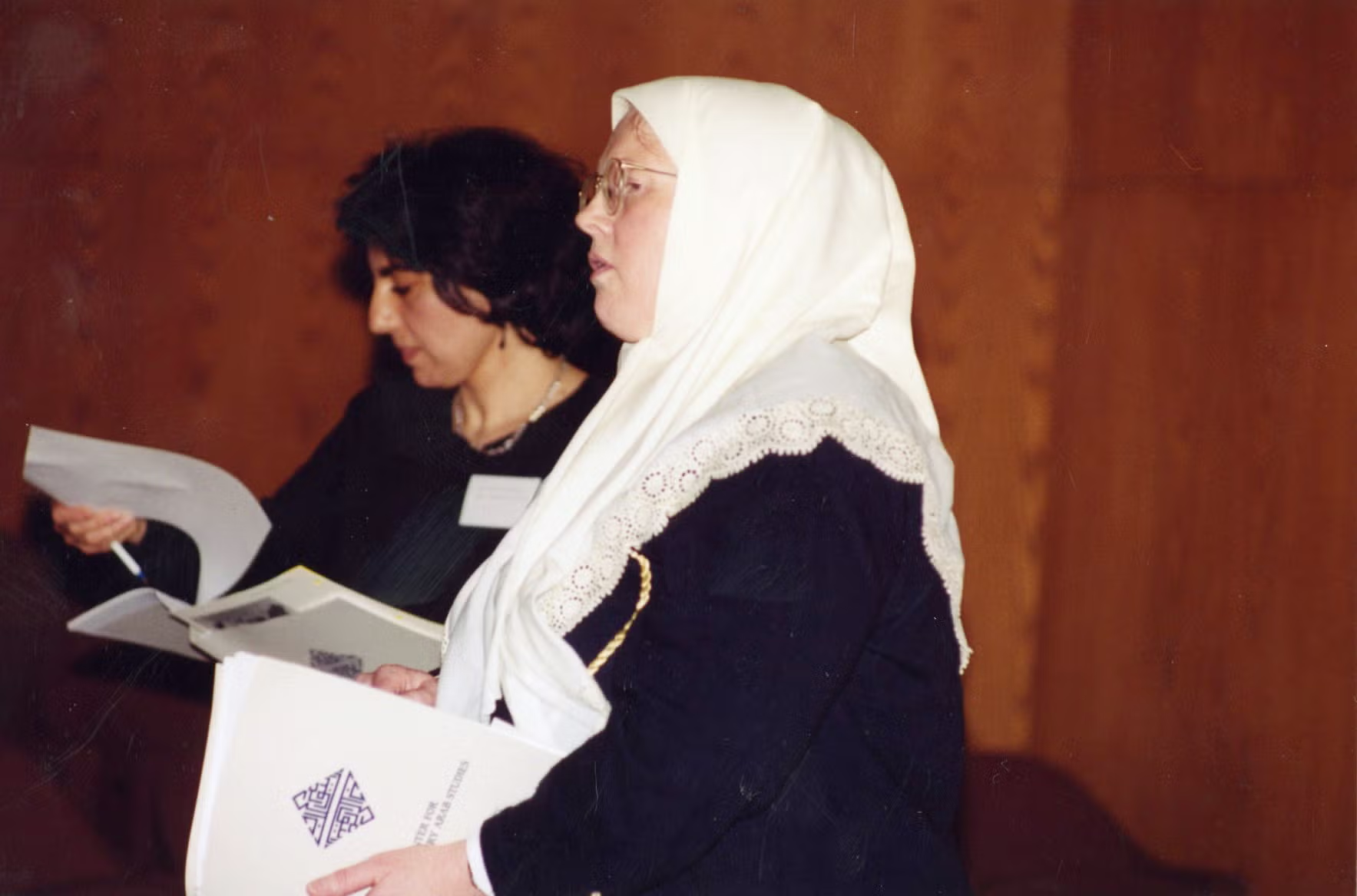
In 1983, CCAS launched its K–12 Education Outreach Program to support American educators in teaching about the Arab world and Islam with accuracy and depth. Drawing on the center’s scholarly expertise, the program organizes teacher workshops, develops curricular resources, offers classroom presentations and educational trips to the region.
Zeina Azzam worked at CCAS in the 1980s and returned as coordinator of the outreach program in 1994 before becoming director through 2013.
She says of the outreach program’s beginnings: “In the early eighties, the whole idea of outreach by universities to K-12 schools was taking hold, and it was a very exciting time. Middle East studies centers across the country started to explore how to share the expertise of their faculty and students with the community, especially since there was a paucity of resources on the region for the pre-college level. At that time, there was so much turmoil in the region—in Lebanon, Palestine, Iraq, Iran, Egypt and more—and teachers and students needed help in understanding what was going on.”
The approach of the outreach program fit in with CCAS’ overall teaching approach, says Azzam: “It was important to us to present Arabs and Arab voices without losing the context of the region and to foster an understanding that went beyond wars and oil and U.S. interests. We wanted to spotlight Arab cultures and histories and civilizational legacies.”
Initial funding for the program came from CCAS donors, according to Azzam. In 1997, the education outreach program expanded when it received support from a U.S. Department of Education grant designating CCAS as a National Resource Center on the Middle East and North Africa (NRC-MENA). That funding ended in 2025. Additional funding has come from Aramco-USA and Georgetown’s Alwaleed Center for Muslim-Christian Understanding.

The program’s impact on its participants was profound. Azzam explains: “To this day, if I run into one of the teachers who traveled with us, they describe their experiences as life-altering—of course, there is nothing like seeing and knowing a place and a culture first hand, which was our intention with these trips.”
Azzam depended on “certain operative beliefs” to guide her work: to emphasize the diversity of the Arab people and culture, to present the Arab world as a place rich in history and culture and to highlight the arts and their importance to Arab society.
“Arabs are not a homogeneous group of people. They are diverse in every way—socioeconomic class, values, political views, religions and religiosity, professions, geographically influenced lifestyles,” Azzam explains. “Once you understand this diversity, it becomes hard to subscribe to old, worn stereotypes.”
Navigating CCAS through 9/11 and the Global War on Terror
By September 2001, the educational outreach program was on firm footing and established as the “go-to place to learn about the Arab world and Islam,” Azzam says.
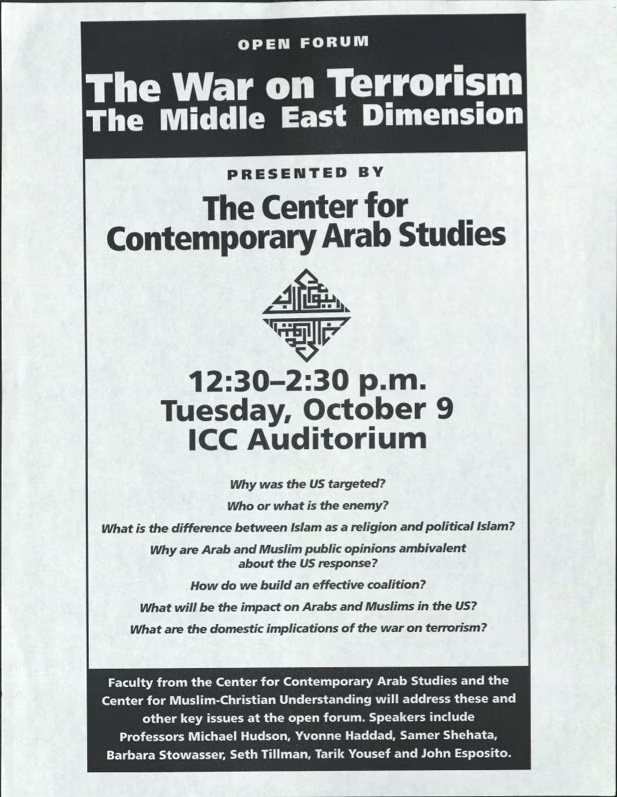
When the terrorist attacks of September 11, 2001, rocked the United States and catapulted the United States into the Global War on Terror, CCAS played a crucial role in fostering understanding, countering prejudice and shaping public discourse on the Middle East, Islam and Arab American communities. As global interest in the region surged following 9/11, applications to the MAAS program more than doubled, and the importance of CCAS as a National Resource Center for teaching about the Arab world became even more pronounced.
“Our educational outreach program played an important role in providing nuanced information about the Arab world and Islam at a time in which there was much misinformation circulating,” Adely says.
Azzam remembers a huge need for resources about Islam: “Teachers wanted to make sure that their students were exposed to correct and unbiased information about the religion and about Muslims themselves. I had many invitations for Muslim students to visit schools and talk about their lives, their countries and their religious and cultural practices. They also were asked to give their views about profiling and discrimination against Arabs and Muslims—which were rampant at that time and, of course, that continues to this day. It was a fraught and difficult time, yet it also brought more positive attention to the CCAS outreach program and deepened our activities and offerings.”
Focus on Palestinians
Another political issue that has brought attention to the work of CCAS is the Israeli-Palestinian conflict, which has intermittently preoccupied American policymakers and impacted perceptions of the Arab world by Americans. From the 1982 invasion of Lebanon by Israel to the October 7, 2023, attack by Hamas, CCAS has responded with education and scholarship.
“At the time of the founding of CCAS, views of the Arab World held by American policymakers and the American public were shaped virtually without reference to a Palestinian narrative—the rights and aspirations of Palestinians were almost entirely absent from public discourse. I think CCAS has played an incredibly important role in consistently allowing the Palestinian voice to be heard in classes and programming,” Tucker says.
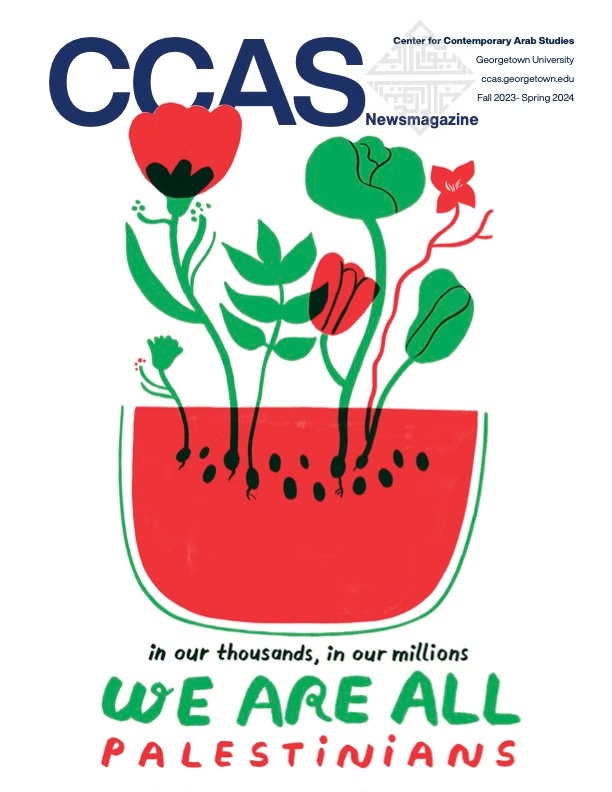
Adely also sees the educational role as central: “The center plays a particularly important role in educating about these issues, as the perspective of the Palestinian people has long been censored in the U.S., and we have endeavored to provide a space for diverse and critical perspectives and Palestinian voices,” she says. “We have also highlighted the cultural richness of Palestine—resisting the tendency to frame Palestine and Palestinians solely through a lens of conflict.”
Although the Israeli-Palestinian conflict is not the only one in the region, it requires attention due to multiple factors, according to the faculty.
“The question of Palestine has haunted the region for the past century as a source of instability. It is impossible to study the Arab region in modern times without centering the unresolved question of how Palestinians will realize their right of self-determination and how Israel will contribute to the goal of stability and peace in the region,” says Tucker.
Davis points to its longevity and current relevance, as well as the prominence of U.S. government support for Israel: “Because the Israeli-Palestinian conflict has been going on since 1948, the ongoing displacement and killing of Palestinians continues in the present, and the U.S. government provides billions of dollars in weapons to Israel, it is incumbent on us to teach and speak about such issues since they impact the people in the region.”
CCAS’s focus on Palestine has seen some changes since the early years, says Tucker: “It has not always been easy to swim against the tide of uncritical support of Israel, but CCAS has persisted. Its faculty have also produced highly respected scholarship on Palestine, and many MAAS students have studied the issue and gone on to make a difference as experts on Palestine in academia and the public sphere. We are no longer atypical when it comes to our attention to the Palestinian question—Palestinian studies now has an established place in academia…it makes it less of a lonely post.”
Emphasis on women in the Arab world
Another area on which CCAS has led the way is a focus on women in the Arab world. Adely points to the hiring of Tucker and Professor Barbara Stowasser as scholars in gender in the Arab world and Islam as being key: “Both Tucker and Stowasser were instrumental in bringing a gendered lens to understanding the region, ensuring that women’s voices were represented in our teaching and programming and incorporating a focus on gender in the curriculum.”
“CCAS held its annual symposium on Arab women in 1986; I’m fairly sure it was the first major conference ever held in North America that focused on women in the Middle East. And it brought together scholars—all women, as I recall—from the U.S. and the Arab World for two days of presentation of new research and exciting dialogue that put the kibosh on views of Arab women as secluded and benighted,” Tucker recalls.
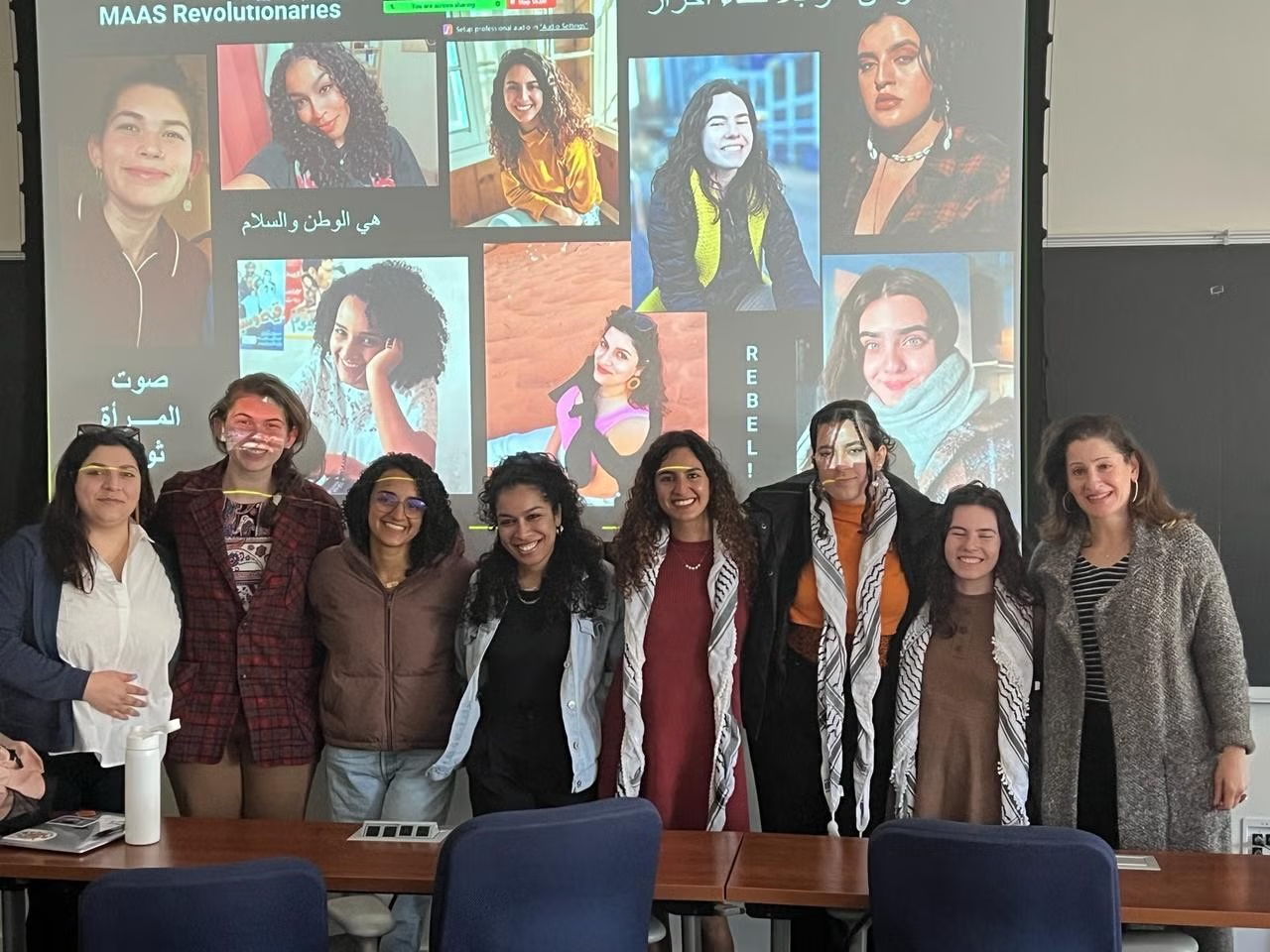
Davis sees a gendered lens as still being important today: “What is important for us as CCAS is to learn about how women and men in the Arab world are navigating society and political inclusion, what they are advocating to change and what they are working to make them who they are or want to be. It is their lives and their worlds—how we can understand that with all of its complexity is our job as scholars and educators.”

Looking ahead to the future of CCAS
Looking back over the 50 years, impact can be seen in the accomplishments of over a thousand graduates, the wider embrace of Palestinian studies and gender studies in the Arab world and the influence of the outreach program on high school teachers.
Azzam explains: “It is most gratifying to see teachers adopting a novel inspired by the outreach program, using one of our curricular resources or organizing cultural events in their schools with activities they learned at a workshop.”
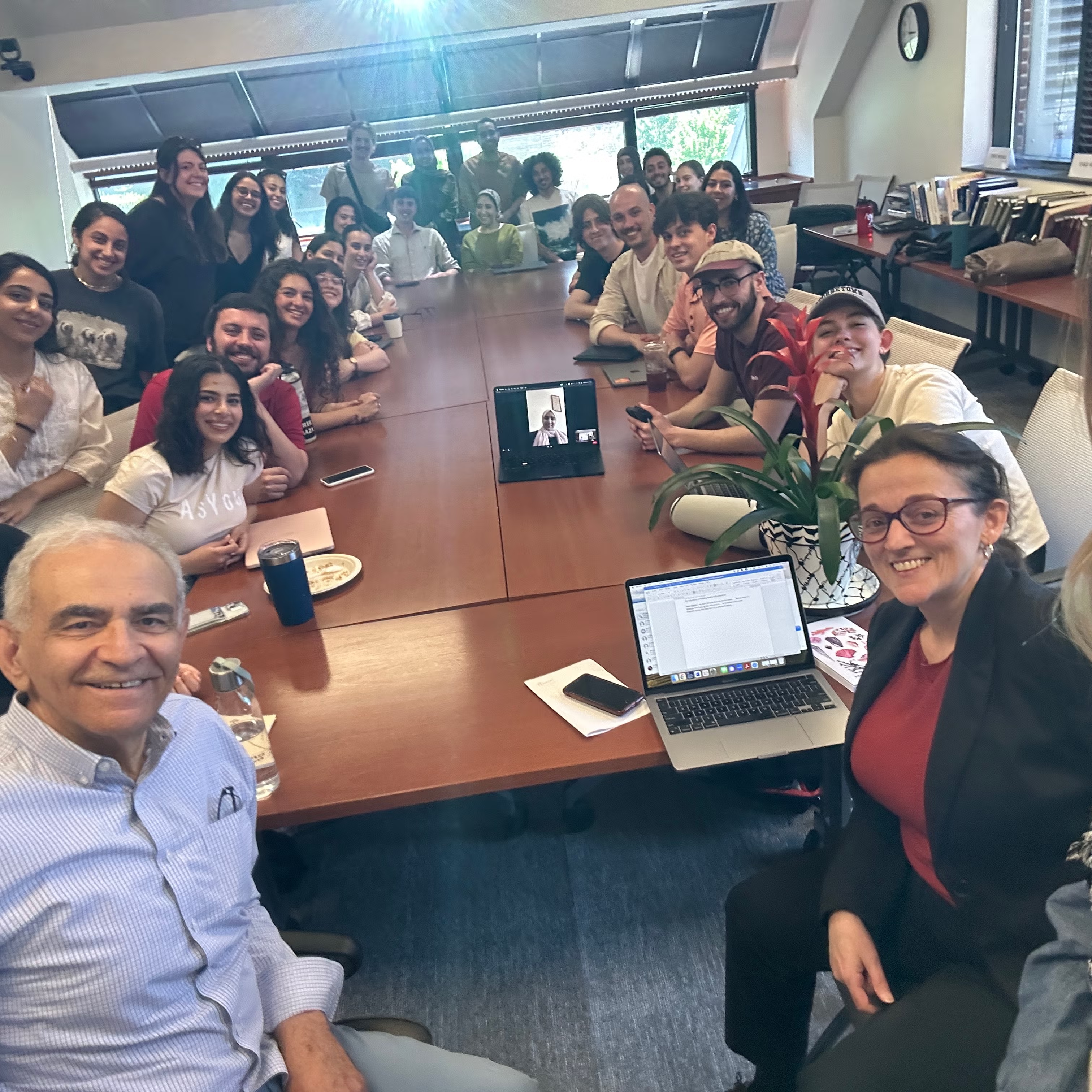
But looking ahead, where do the faculty want the center to go? Sassoon focuses on the education for the students: “I really do hope that we continue to attract bright and hardworking students who end up going wherever they want to, whether it’s in business or finance or policy or government or academia or journalism. I think our job and our mission is to provide them with the tools that will help them in their careers.”
Tucker celebrates the evolving scholarly focus: “The CCAS focus on refugees and forced migration or the environment, for example, are departures from the areas that drew the attention of our founders but are very much in keeping with current concerns, the research of the faculty and the interests of many students.”
Professor Killian Clarke, assistant professor at CCAS and the newest member of the CCAS core faculty, sees this moment like others in the center’s history: “The timing of this anniversary coincides with a moment when Middle East studies—and area studies more broadly—is at a critical juncture. At this moment, then, it is all the more important to embrace and re-invigorate our mission so that we can offer another fifty years of engaged, rigorous and ethically-informed research and training on the Arab world.”
Professor Marwa Daoudy, Seif Ghobash Chair in Arab Studies, is director of the center’s academic program, specifically its master’s program. She says of carrying the legacy of CCAS forward: “Knowledge production becomes an act of witnessing, preservation and refusal, the refusal of erasure, of dehumanization and of narratives that obscure structural violence. By linking past intellectual traditions to present imperatives and future possibilities, Arab Studies will remain a vibrant space for imagining alternative futures.”
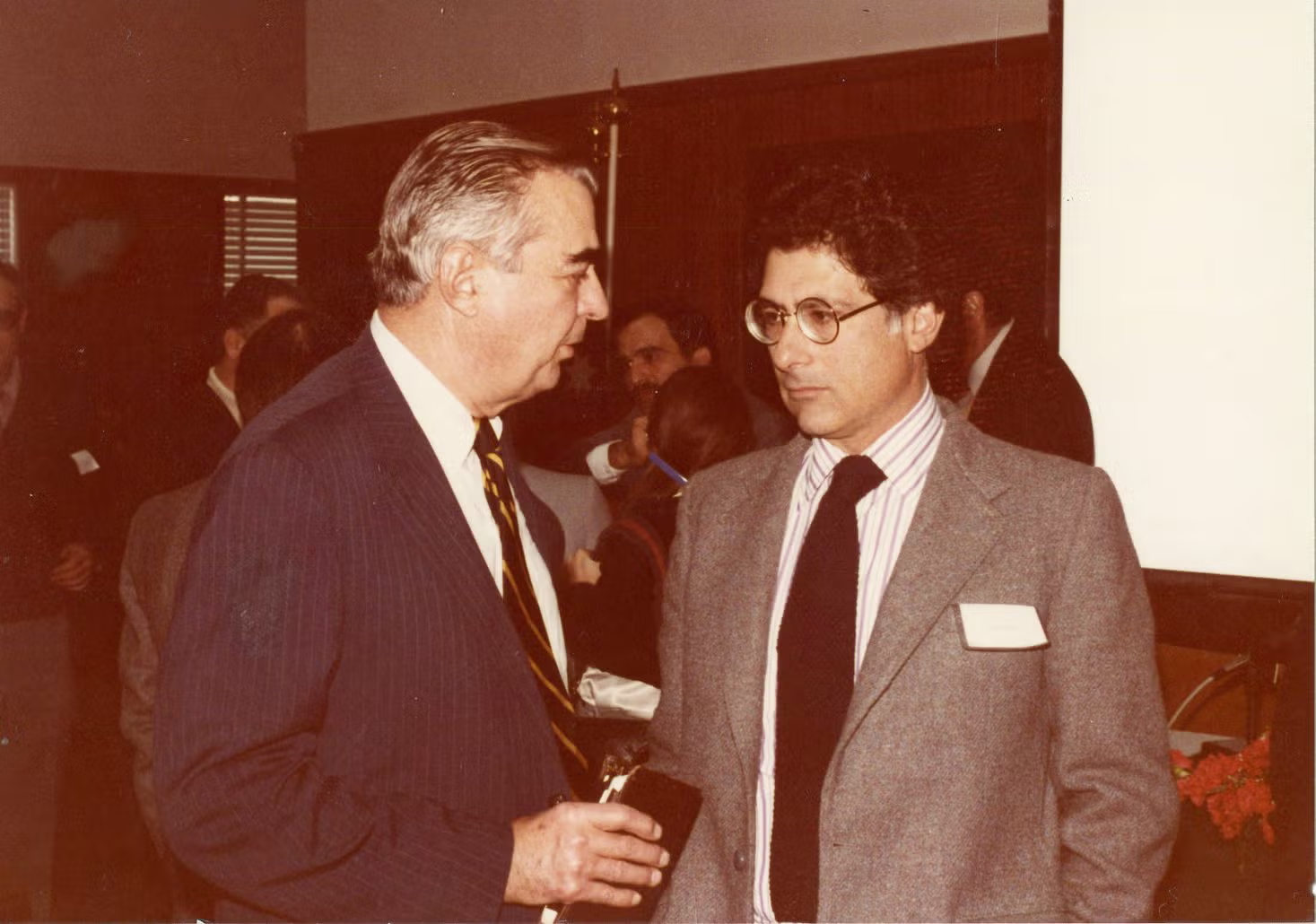
The famed scholar Edward Said delivered a lecture in December 1976 at CCAS titled “The Intellectual Origins of Orientalism.” This talk was a pivotal moment, offering an early articulation of the ideas that would form the basis of his landmark 1978 book, Orientalism, that helped establish post-colonial studies.
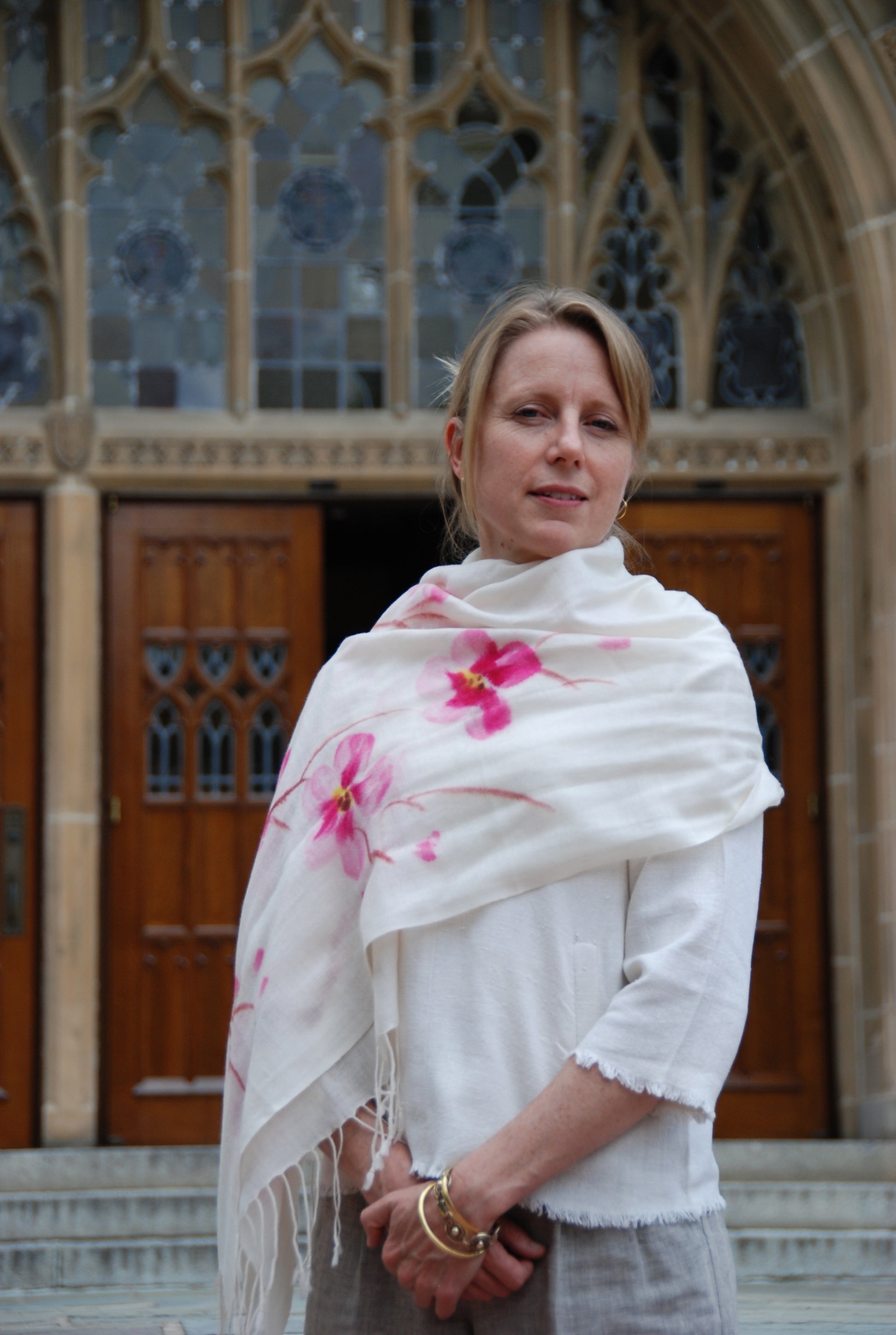
Davis takes inspiration from Said’s words:
“I think as CCAS we take seriously Edward Said’s injunction that, as scholars, our choice is to either ‘put intellect at the service of power or at the service of criticism, community and moral sense.’ We have consciously chosen the latter, and I hope the future will be one in which criticism, community and moral sense guide our teaching, research and public engagement.”