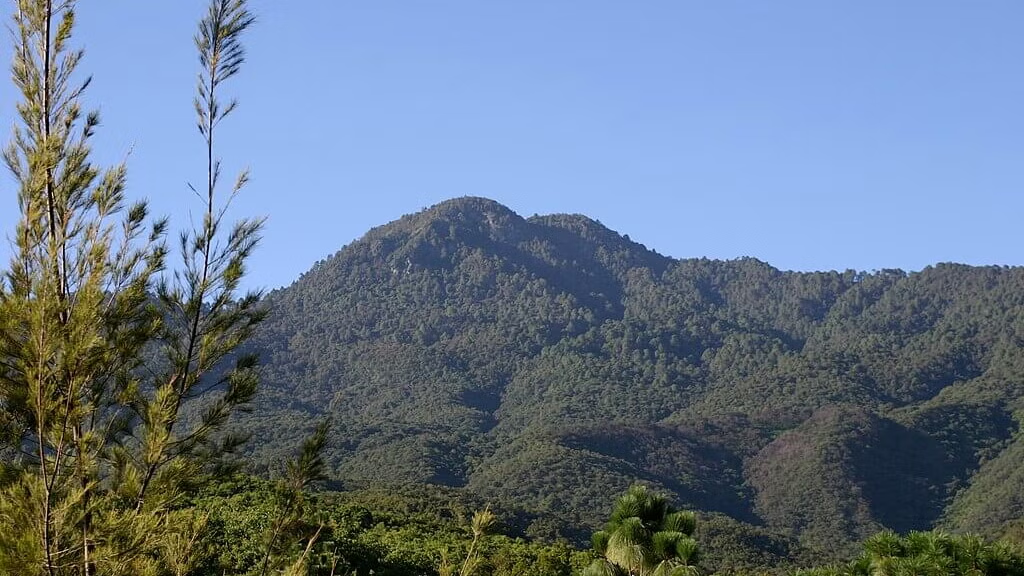
From Georgetown to the Sierra Mazateca, learning doesn’t stop at the classroom door. This summer, SFS student Barón Castañares (SFS’27) expanded the boundaries of his culture and politics major by living in villages throughout Oaxaca, Mexico, working with shamans and conducting research on traditional indigenous psychedelic mushroom ceremonies and the impacts of climate change and ecotourism on their sacred healing practices.
We spoke with Castañares about developing the project, building relationships with local communities and learning to approach fieldwork with curiosity, respect and reciprocity.
Q. What initially drew you to SFS, specifically the culture and politics major?
A. My most transformative personal, professional and academic experiences have all been shaped by environments immersed in international cultural exchange. I grew up and attended community college in Chula Vista, California, a vibrant border city just miles from the busiest land crossing in the Western Hemisphere. My home is a truly unique, binational blend of two countries, where history, language and culture collide to form something new that transcends any line drawn on a map. That environment exposed me to the richness of living within multicultural spaces and taught me how to navigate them authentically.
After high school, I spent time deepening this passion, traveling across 20-plus countries while backpacking, volunteering and living with strangers. That experience, and every interaction within it, profoundly changed me and uniquely shaped my global education. After returning home and graduating from Southwestern College, I transferred to Georgetown’s School of Foreign Service, a place that shares my core belief in holistic education through diverse experiences and cultural exchange. Studying culture and politics gives me an academic home for the questions that have shaped my journey, and lets me pursue the kind of embodied, humanized politics I have come to understand the world through, free from restrictive institutional rigidity.
Q. How did you first conceptualize this research project, and how did you go about building the trust necessary to work directly with shamans and local communities?
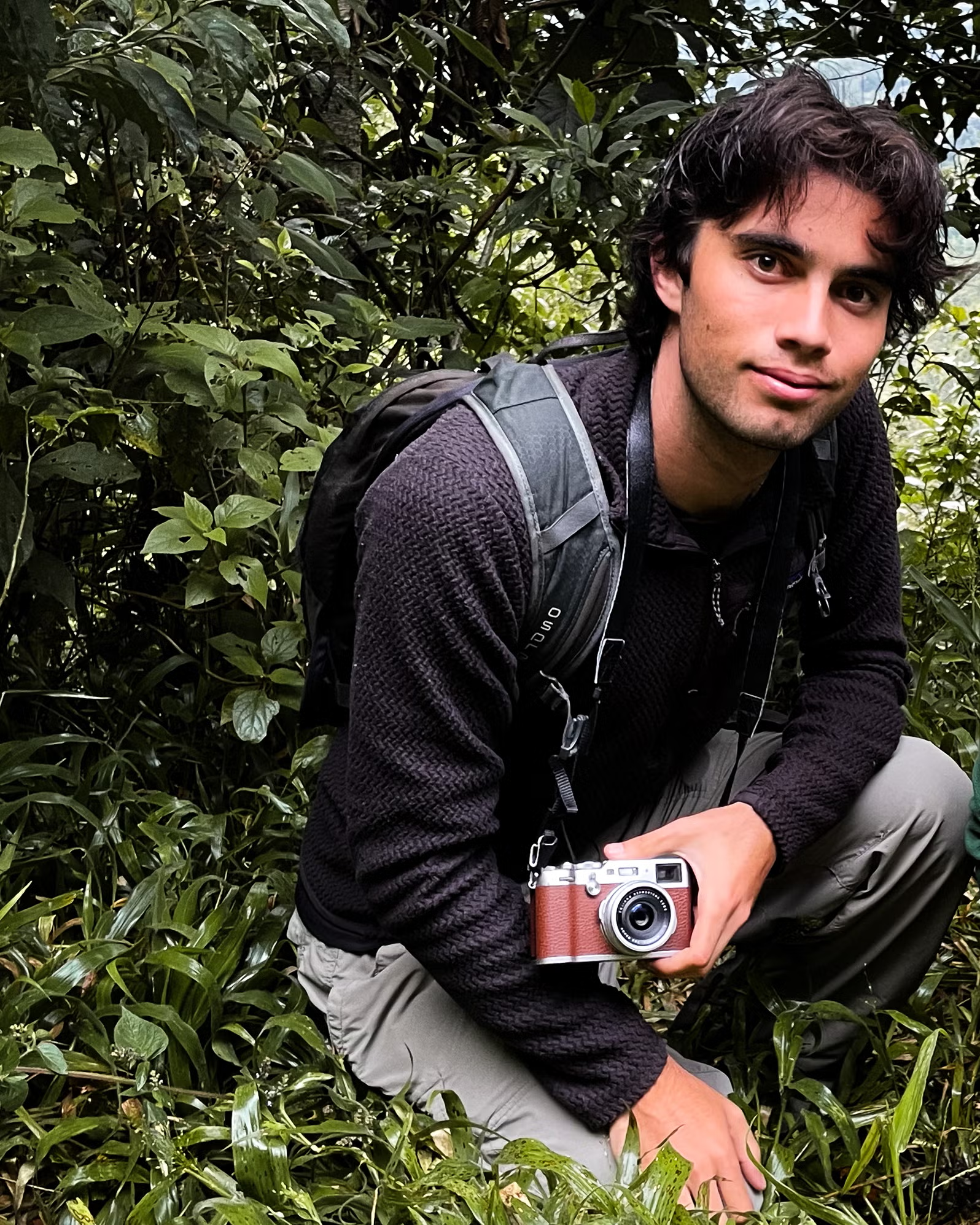
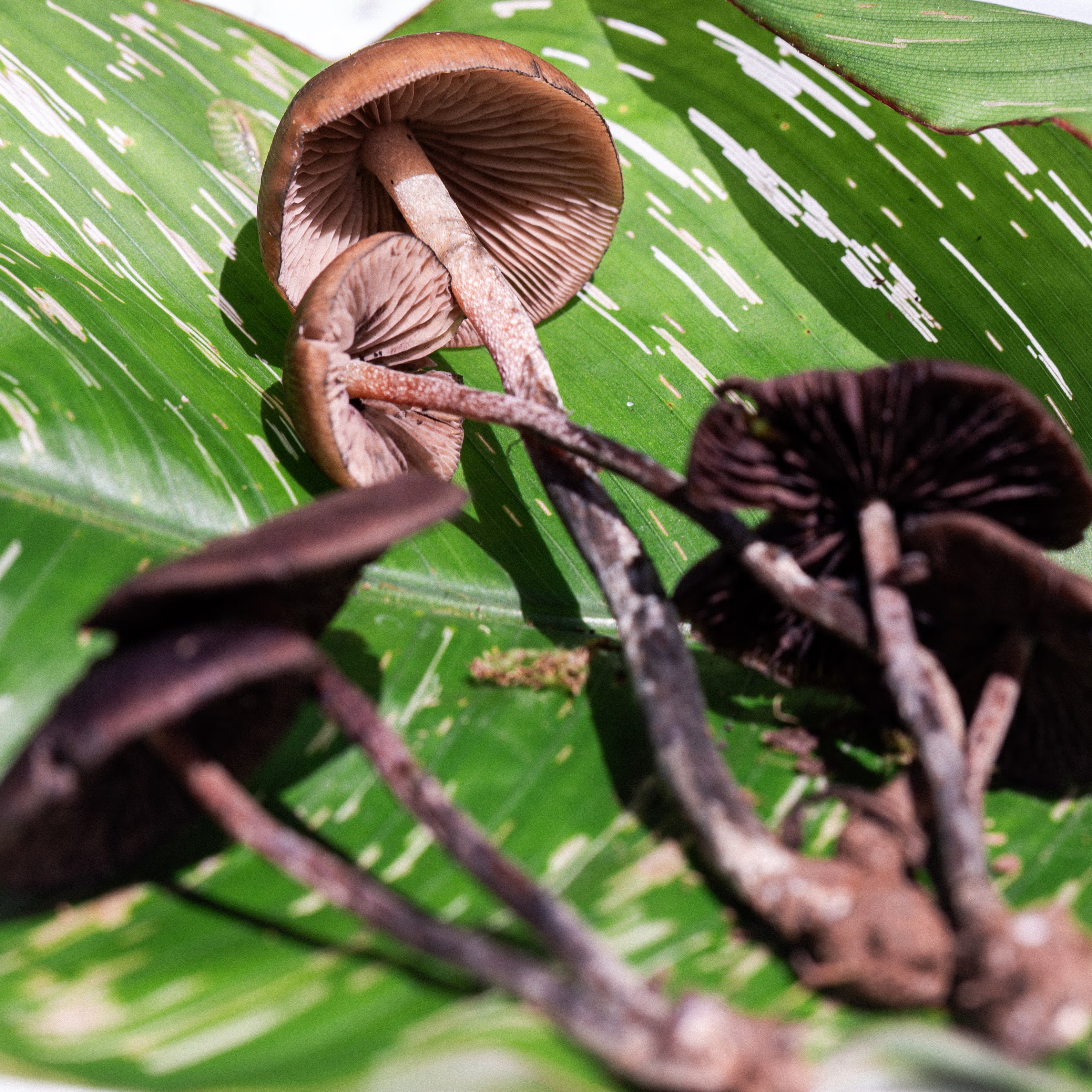
A. While I had previous interest and experience studying alternative plant medicines and spiritual traditions, I was directly introduced to this area of study during my Psychedelics and Spiritual Healing course last fall, taught by Professor Annalisa Butticci. Throughout the semester, we examined traditional and modern uses of sacred plant medicines, such as ayahuasca, ibogaine and psilocybin mushrooms, through spiritual, scientific, legal, political and Indigenous lenses. The course included guest lectures from key figures in the field who joined our sessions from around the world. I was most drawn to our unit on traditional mushroom ceremonies, called veladas, after meeting two Mazatec scholars and dedicated my final independent research project to psilocybin mushrooms.
Over the following months, my interest in this research grew and led to opportunities to host seminars for student groups and give guest lectures in discussion sections on the topic. Following the course, I stayed in touch with Professor Butticci, who proposed the research project “Entheogenic Worlds: Environmental Justice and the Ecospiritual Futures of Sacred Fungi in the Sierra Mazateca,” which earned the Earth Commons’ ECo Impact Award. Because of my prior work in this space, I was invited to join as a research assistant, supporting fieldwork, project development and visual documentation. Throughout, we stayed in close contact with our Mazatec educators and collaborators through regular meetings and shared planning, and given the intimacy of these traditions and the violent history of Western extractivism in these communities, we understood that trust had to be earned through respect, care and consistent action, not assumed. Every member of the team was actively involved in shaping the fieldwork itself, so transparency and reciprocity stayed built into every step.
Q. How did you pick Oaxaca, Mexico, as the location for your research? Is this project specific to Indigenous communities in Mexico or are there similar practices in other countries or regions?
A. Sacred plant traditions exist in different forms around the world, but the Sierra Mazateca carries a singular and complicated history. The culture and past of this region are uniquely Mazatec, and involve deep relationships with plant medicines and the scars of extractivist moments in the 1950s and 1960s. This deep history of resistance, preservation and adaptation is exactly what makes the region so urgent to study now. As a site now associated with the “modern psychedelic movement,” many intersecting pressures we see today, from wellness tourism to climate change, are hitting Huautla with unusual intensity. We hope to investigate these multidimensional tensions and build an understanding of the historical context, external pressures and ecospiritual future of the community.
Our project focuses on the Sierra Mazateca specifically, but it’s part of a much broader global pattern. Sacred plant and fungal traditions are now facing similar tensions between cultural preservation, ecological change and rising outside demand, which is part of why our project connects to a wider Georgetown initiative comparing sacred ecologies across these different regions.
Q. What was the day-to-day reality of your fieldwork, and what is one major cultural takeaway or unexpected lesson that challenged your perspective?
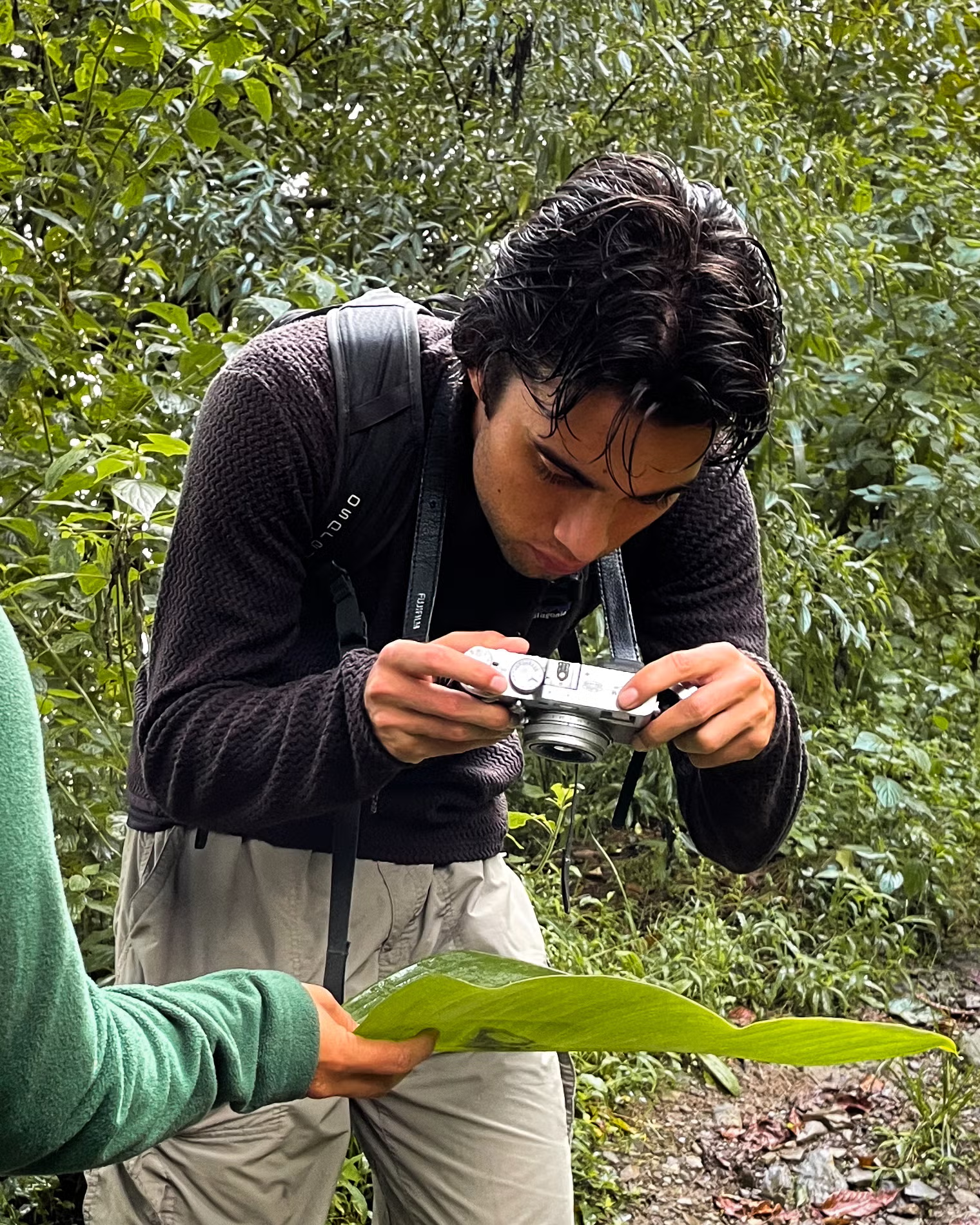
A. Over the course of our fieldwork, no two days were the same. Most started early, as early as 4:30 a.m., and included multiple outings, ranging from interviews in the city center to remote jungle hikes. We spoke with a wide range of experts across disciplines, including local teachers, biologists, reporters, artists and other community and spiritual leaders. When we weren’t actively conducting research, we were processing the day’s materials: transcribing conversations, editing photos, writing reflections and organizing our upcoming schedule to stay efficient. This work was physically demanding and required constant adaptability, often involving treks across mountainous terrain to reach secluded towns, exploring cliffs and caves and preparing for the sudden rains common in this humid region. Despite the packed itinerary, we always found time to share a family breakfast and dinner together, reflecting on our days and enjoying delicious local meals with the team.
Spending extended time researching in this community has changed my perspective on fieldwork, especially as a photojournalist. This trip gave me access to deeply personal and culturally significant spaces that very few people ever see. We were often invited into people’s homes, churches and families’ intimate, vulnerable spaces that have to be earned. These moments, such as the countless home-cooked meals shared with new friends, are among the most beautiful I have experienced. While it can be tempting to document these feelings and spaces, or capture an incredible National Geographic-style photograph, I’ve learned that letting the moment exist freely and uncaptured is often the right choice. Being present can be difficult when you feel compelled to document and build an archive, but doing so is crucial to respecting the experience and the trust of those who invited you into the space.
Q. How did studying the preservation of these traditional sacred practices—amidst modern global forces like climate change and international tourism—connect back to your broader SFS education and how you view global affairs?
A. In the Sierra Mazateca, the sacred plants that have sustained Mazatec spiritual life for generations are becoming caught between accelerating global forces. Climate change and subsequent shifts in rainfall and temperature patterns may be affecting when and where these mushrooms grow, while a global psychedelic economy, driven by Western psilocybin therapy research and spiritual tourism, is once again pulling this traditional knowledge system into international markets. Watching both of these pressures converge on one community has given me a tangible reference point. Environmental change and global economic demand are never separate from questions of culture, sovereignty and justice.
Most of my SFS coursework sits at these intersections. Courses in environmental justice and policy, for example, have taught me to treat climate change as an active driver of political and cultural disruption rather than a neutral ecological statistic and to recognize how global intervention, even when well-intentioned, can reproduce old patterns of extraction in new forms. This fieldwork has pushed that theory into practice. I’ve watched this community negotiate in real time, finding a path between preserving sacred tradition and navigating outside pressures. That negotiation is, at its core, a story about global affairs playing out in the Sierra Mazateca.
Q. What advice would you give to other SFS students looking to conduct their own independent, international research?
A. Firstly, I believe that any productive and valuable research has to stem from genuine interest in and respect for the region you hope to engage with. It’s crucial to stay consciously aware of the power dynamics and social privileges between your position as a Georgetown researcher and a new international community, rather than treating that awareness as an afterthought. Ignoring this step won’t just affect the quality and authenticity of your research; it creates gaps that limit the real impact your work can have on a community. Be real, be human and stay flexible when possible, because fieldwork often takes you down unexpected paths when you’re open and engaged for the right reasons.
Moreover, research is not vacation. While the experience is transformative and full of memorable, fun moments, commitment to the work is crucial. Fieldwork is hard, tiring and sometimes tedious or boring, but that behind-the-scenes effort is the backbone of a project. You can choose to study abroad in beautiful beach towns or cities, but exploring a more unconventional place you didn’t expect may introduce you to an undercovered niche worth exploring and is often the most fulfilling choice. Be curious and open-minded, because at Georgetown, you may end up falling in love with work in places you never would have expected.