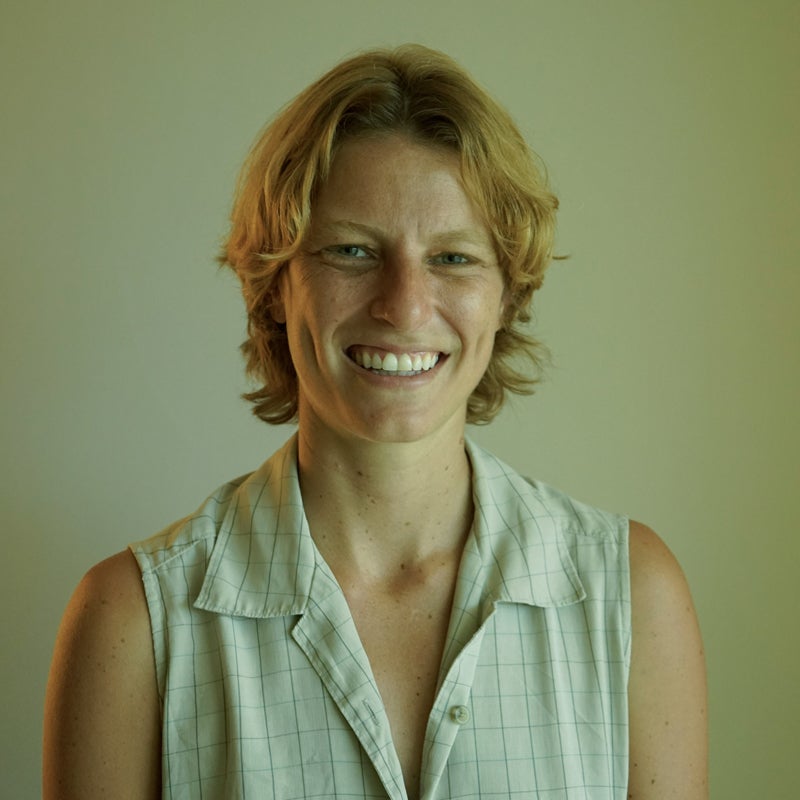
Sydney Rubinstein
Global Human Development Student
Sydney Rubinstein is a Master's candidate in Global Human Development at Georgetown University's Walsh School of Foreign Service and a Short-Term Consultant with the World Bank's Social Development team in Indonesia. Her work focuses on forest conservation, benefit sharing, and community engagement, supporting implementation of Indonesia's Emission Reduction Program through policy analysis, monitoring and evaluation, and field engagement.
Drawing on a background in public health, conservation science, international development, and community-based research, Sydney approaches climate policy through an interdisciplinary lens. Her experience spans every level of policy implementation, from collaborating with Indigenous communities and local civil society organizations to engaging with government counterparts and Multilateral Bank teams. She enjoys working at the intersection of technical research and implementation, translating complex ideas across diverse audiences and bringing together perspectives from communities, practitioners, researchers, and policymakers.
Sydney's research focuses on climate governance, environmental policy, and the institutions that translate ambitious climate commitments into meaningful outcomes. She is particularly interested in strengthening the governance, accountability, and community partnerships that enable climate finance and conservation initiatives to deliver equitable, lasting impact. Her work is grounded in the belief that effective climate policy requires not only ambitious national commitments, but also strong institutions, accountable governance, and meaningful partnerships with the communities responsible for implementing them.
At Georgetown, Sydney serves as President of the Georgetown Anti-Poverty Society. She speaks fluent Spanish and has worked and travelled extensively throughout Latin American and South East Asia.
Summer Internship
During the summer, I worked as a consultant with the World Bank's Social Development team in Indonesia, supporting implementation of the EnABLE program's benefit-sharing mechanism under the country's Forest Carbon Partnership Facility Emission Reduction Program. Based in Jakarta, I supported monitoring across 71 villages and 12 civil society organization partners, and traveled to East Kalimantan for field engagement, including visits to remote communities in Mahakam Ulu and attendance at the district-level kickoff meeting for program implementation. My work focused on assessing whether communities were meaningfully included in the program and how they experienced accessing benefits from forest carbon finance. My contributions included developing qualitative monitoring tools and data-tracking systems, reviewing partner implementation reports and safeguard requirements, and engaging directly with government agencies, civil society organizations, and Indigenous and local communities in the field. I also assessed partner-led trainings on gender equality, disability, and social inclusion and developed recommendations to strengthen coordination and community engagement. This experience deepened my understanding of the challenges involved in translating global climate finance commitments into locally accessible development benefits, particularly where communities face barriers related to information, institutional capacity, and meaningful participation. It reinforced for me the importance of designing climate and conservation programs around the people who are ultimately expected to benefit from them.